

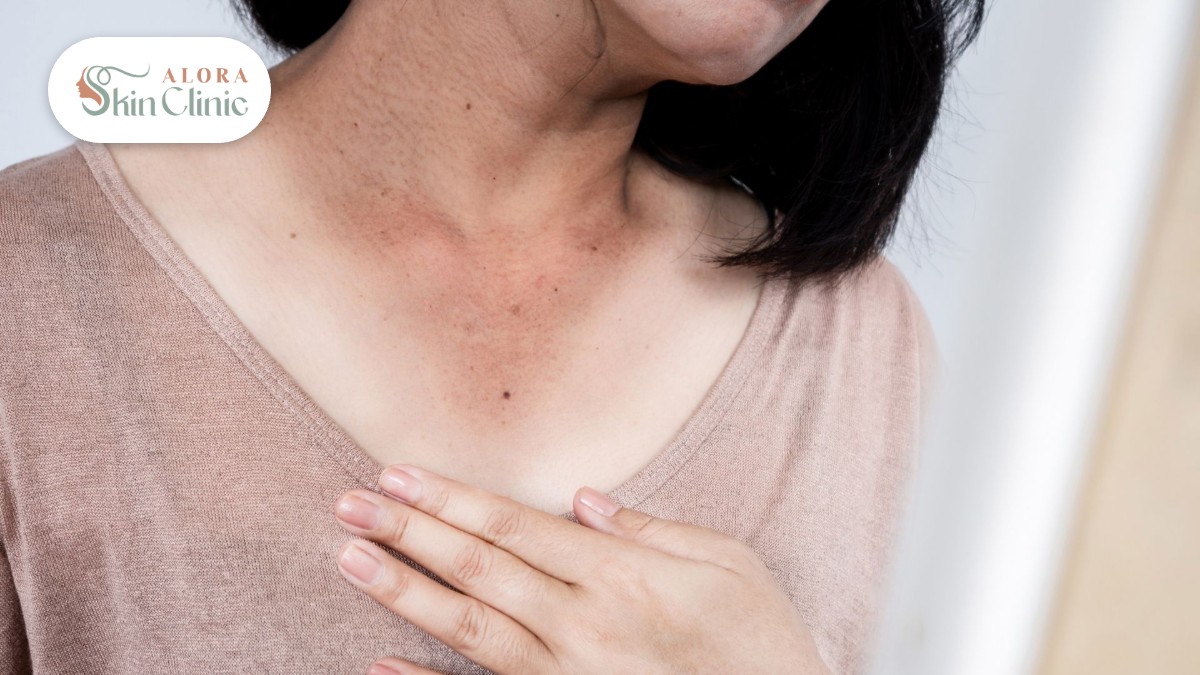
Summer in Scarborough is winding down, and a lot of people are noticing the same thing in the mirror. Flat brown spots that were faint in June now sit clearly on the cheeks, the forehead, the tops of the hands, and the chest. The skin looks a little less even than it did in spring, freckles have joined together into larger patches, and there may be a rougher, drier feel to areas that caught the most sun. If that sounds like your skin right now, you are looking at sun damage, and the good news is that the end of summer is one of the better times to do something about it.
Here is the honest version of what sun damage and sun spots actually are, why they show up when they do, what genuinely fades them, and the small number of spots that need a doctor rather than a facial.
What sun damage and sun spots actually are
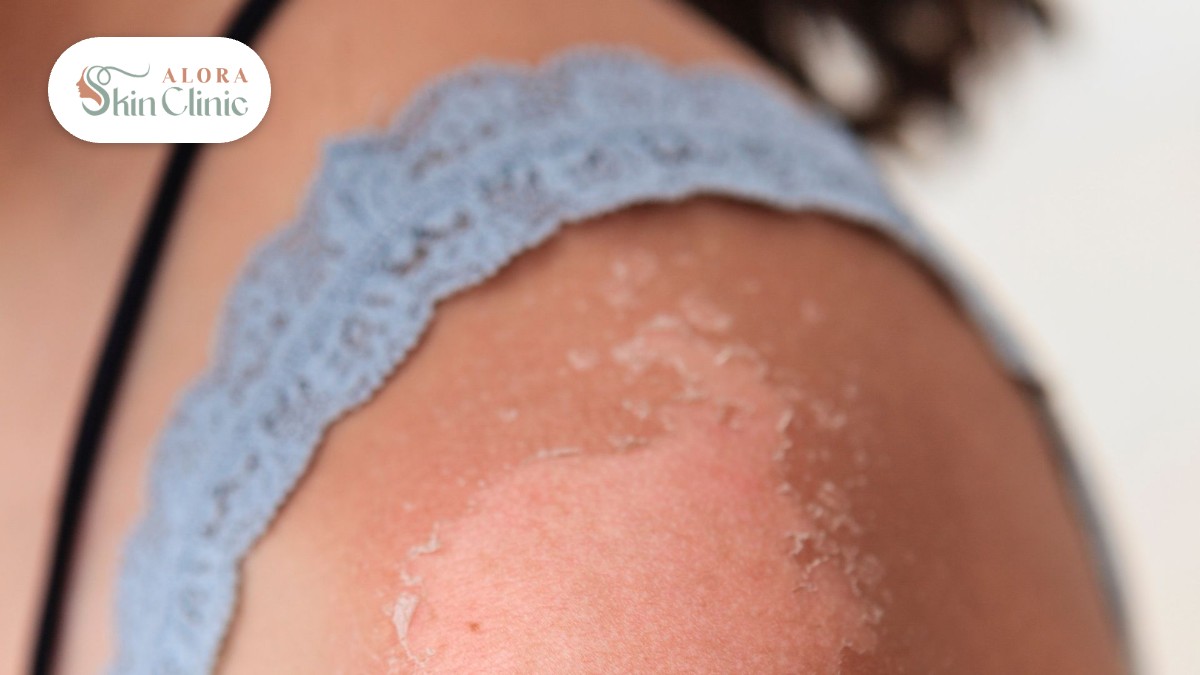
Sun damage is the slow, cumulative effect of ultraviolet light on the skin. Every hour spent in the sun over the years adds up, and the skin responds by making extra pigment to protect itself. Most of the time that shows up as sun spots, which are flat, brown or tan marks with fairly clear edges, usually on the areas that get the most exposure. You may also hear them called age spots or liver spots, though they have nothing to do with age or the liver. They are simply clusters of pigment left behind by the sun.
Sun damage is more than the spots, though. The same ultraviolet light breaks down collagen and elastin over time, which is why sun-exposed skin also tends to show fine lines, a rougher texture, larger looking pores, and a general loss of firmness sooner than skin that has been protected. So when we talk about treating sun damage, we are usually talking about two things at once: fading the uneven pigment, and rebuilding the texture and tone underneath it.
The reason the spots seem to arrive all at once at the end of summer is that a season of sun brings the pigment to the surface. It was building quietly for months, and now it is visible. That timing is actually useful, because the months ahead bring less intense sun, which is exactly when pigment treatments work best.
Why the end of summer is a good time to treat it
There is a simple reason skin clinics get busy with pigment concerns in the autumn. Treatments that fade pigment, and the skin that is healing from them, are both more sensitive to the sun. Starting a plan when ultraviolet levels are dropping means the results hold better and the skin is easier to protect while it settles. Fresh sun exposure is the quickest way to undo pigment work, so beginning as the strong summer sun fades gives the skin a head start.
None of this means the spots will vanish on their own over the winter. Sun damage does not simply fade away with time, and without a plan the same spots tend to return and deepen with the next summer. What the cooler months offer is a better window to treat, not a cure that happens by waiting.
The honest part: what actually fades sun damage
We want to be straight with you here, because the shelf of brightening creams and dark spot correctors promises more than it delivers. There is no cream that erases established sun spots overnight, and anyone selling one as a miracle is not being honest with you. What good topical care can do is real but gradual. Ingredients that slow pigment production and speed up cell turnover, used consistently over weeks and months, genuinely help fade the spots and even the tone. They work best as part of a plan rather than on their own, and they only hold if the sun is kept off the skin.
The other half of the picture is in-clinic treatment, which works faster and reaches the texture damage that creams cannot. And the single most important step, the one that makes everything else worth doing, is daily sun protection. Broad spectrum sunscreen every day, reapplied when you are outside, is what stops new pigment forming and keeps the results you work for. Treating sun damage without daily sunscreen is like bailing out a boat without patching the hole. The realistic goal is skin that looks clearer, brighter, and more even, not skin that pretends it was never in the sun.
Knowing your own skin also matters, because the same sun exposure behaves differently on dry, oily, or combination skin, and on different skin tones. Our guide on oily but dehydrated skin is a good example of why a plan has to be matched to your skin rather than copied from someone else.
How we treat sun damage at Alora
At Alora Skin Clinic in Scarborough, care for sun damage starts with a consultation and a proper look at your skin, so Naz can see which marks are surface pigment, how much texture damage sits underneath, and what will actually move the needle for your skin and tone. From there a plan usually draws on a few things working together.
Fading the pigment comes first. Our pigmentation treatments target the uneven brown marks that sun exposure leaves behind, lifting and breaking up the excess pigment so the skin looks clearer and more even over a series of sessions. This is the part aimed squarely at the spots themselves, and our post on hyperpigmentation and dark spots explains the different kinds of pigment and why they respond differently.
Rebuilding the skin underneath is next. Microneedling prompts the skin to produce fresh collagen, which improves the rough texture, fine lines, and loss of firmness that sun damage leaves behind, and it helps the pigment fade as the skin renews. If you are curious how that works, our guide on how microneedling rebuilds your skin walks through it, and our microneedling devices guide explains why a professional device is not the same as an at-home roller.
Brightening and maintaining is the third part. A HydraFacial with brightening boosters gives a gentle, no-downtime way to keep the skin clear and glowing between the deeper treatments, and a simple home routine of a pigment-slowing serum and daily sunscreen protects the progress. The plan is matched to your skin and adjusted as the marks fade.
Simple habits that protect your skin every day
These do not replace a proper consultation, but they take pressure off your skin and protect the results between visits.
Wear sunscreen every day, not only at the beach. Ultraviolet light comes through cloud and glass, so daily broad spectrum sunscreen on the face, neck, and hands is what stops new sun spots forming. This is the single most useful habit for sun damage, and it is worth doing all year.
Reapply and cover up when the sun is strong. A hat and sunglasses, shade in the middle of the day, and a fresh layer of sunscreen after a couple of hours outside all take real load off the skin. Remember the areas people forget, the ears, the back of the neck, the chest, and the hands, because those often show sun damage first.
Be gentle and be patient. Fading pigment takes weeks to months, and picking at spots or over-scrubbing to hurry it along tends to inflame the skin and can leave marks that last longer than the sun spots did. Sun exposure also deepens under-eye pigment, so if tired, shadowed under-eyes are part of your concern, our guide on dark circles covers why they happen and what helps.
When a spot needs a doctor, not a facial
This is the most important part of the page, so please read it. Most sun spots are harmless, but sun damage is also the main cause of skin cancer, and some spots are not the ordinary kind. A cosmetic treatment is never the right first step for a spot that could be something more, and a responsible clinic will always tell you to have it checked first.
Please see a doctor before booking any cosmetic treatment if a spot or mole shows any of the following. A spot that is growing or changing, one half that does not match the other, irregular or blurred borders, more than one colour within it, a size larger than a pencil eraser, or any spot that itches, bleeds, crusts, or does not heal. A single spot that looks different from all your others is also worth having looked at. These are the well known warning signs of skin cancer, and they belong in a doctor’s office, not ours. Fading treatments are for the common, harmless pigment left by the sun, not for these.
Questions people ask
Can sun spots be removed permanently?
You cannot erase sun damage with a cream, but you can fade the spots and keep them faint. Because they come from ultraviolet exposure, the results hold only with daily sun protection. Without sunscreen, the same spots tend to return with the next summer, so treating the pigment and protecting the skin go together.
Why did my spots get darker over the summer?
Sun exposure triggers the skin to make more pigment, so a season of sun brings existing spots to the surface and deepens them. That is why so many people notice their sun spots most clearly at the end of summer, and it is a natural time to start fading them as the strong sun eases off.
Do brightening creams work on sun spots?
Good ingredients that slow pigment and speed up skin renewal do help, but slowly and as part of a plan rather than on their own. They fade the surface over weeks to months and work far better alongside in-clinic treatment and daily sunscreen than they ever do by themselves.
Is it better to treat sun damage in the fall or winter?
The cooler months, when ultraviolet levels are lower, are a good window, because pigment treatments and healing skin are both more sensitive to the sun. Starting as the summer sun fades helps the results hold, though sunscreen still matters every day of the year.
Will one treatment clear my sun spots?
Fading pigment and rebuilding sun-damaged texture happen over a series of sessions, not in a single visit, and the exact number depends on how much sun damage there is and your skin. Naz maps out a realistic plan at your consultation so you know what to expect before you begin.
Ready to fade that summer sun damage?
You do not have to accept uneven, spotted skin as the price of a Scarborough summer, and you do not have to guess which product might help. At Alora Skin Clinic, we start with an honest look at your skin, explain clearly which marks are surface pigment and which need rebuilding underneath, and build a plan to fade the sun spots and protect the results. If a spot turns out to be something that needs a doctor first, we will tell you honestly.
If you would like a clear plan for your sun damage, book a consultation with Naz at Alora Skin Clinic, 21 Glendinning Ave inside Pharmasave in Scarborough, or call or text (647) 547-0597. We will tell you what is realistic before you begin.