
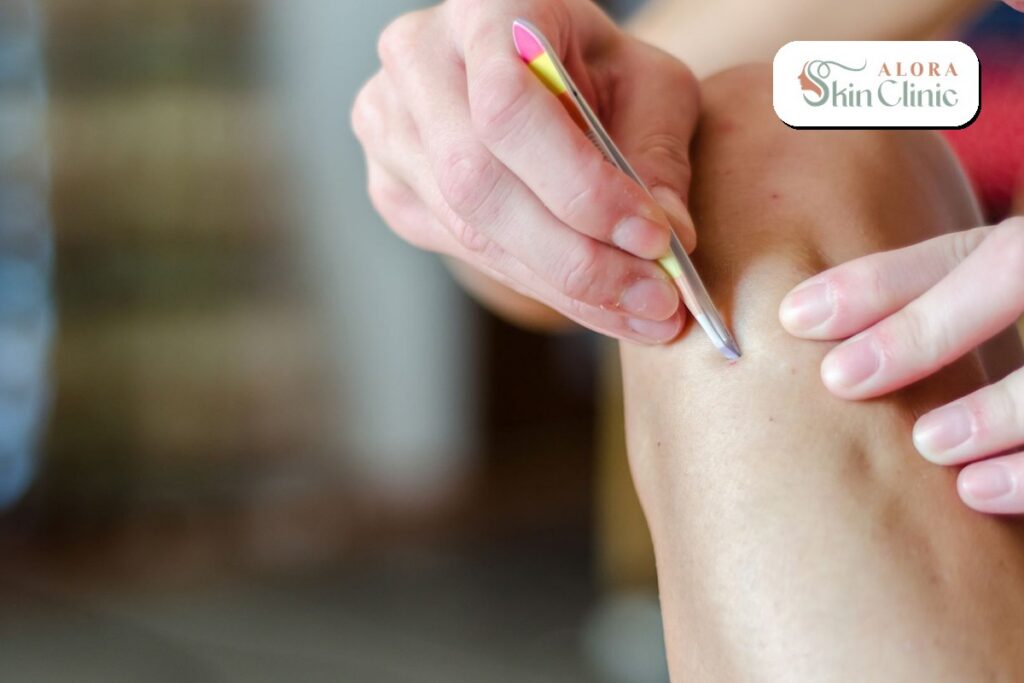
You shave or wax, the skin looks smooth for a day or two, and then the little red bumps arrive. Some are just angry and itchy, some have a dark hair curled up visibly under the surface, and a few turn into sore, pus-filled spots that you are tempted to pick at. They show up on the bikini line, the legs, the underarms, and for a lot of men along the neck and jaw. Ingrown hairs are one of the most common and most frustrating results of regular hair removal, and the cycle can feel impossible to break.
Here is the honest version of why ingrown hairs keep happening, why the creams and scrubs aimed at them only go so far, and what actually reduces them for the long term.
What an ingrown hair actually is
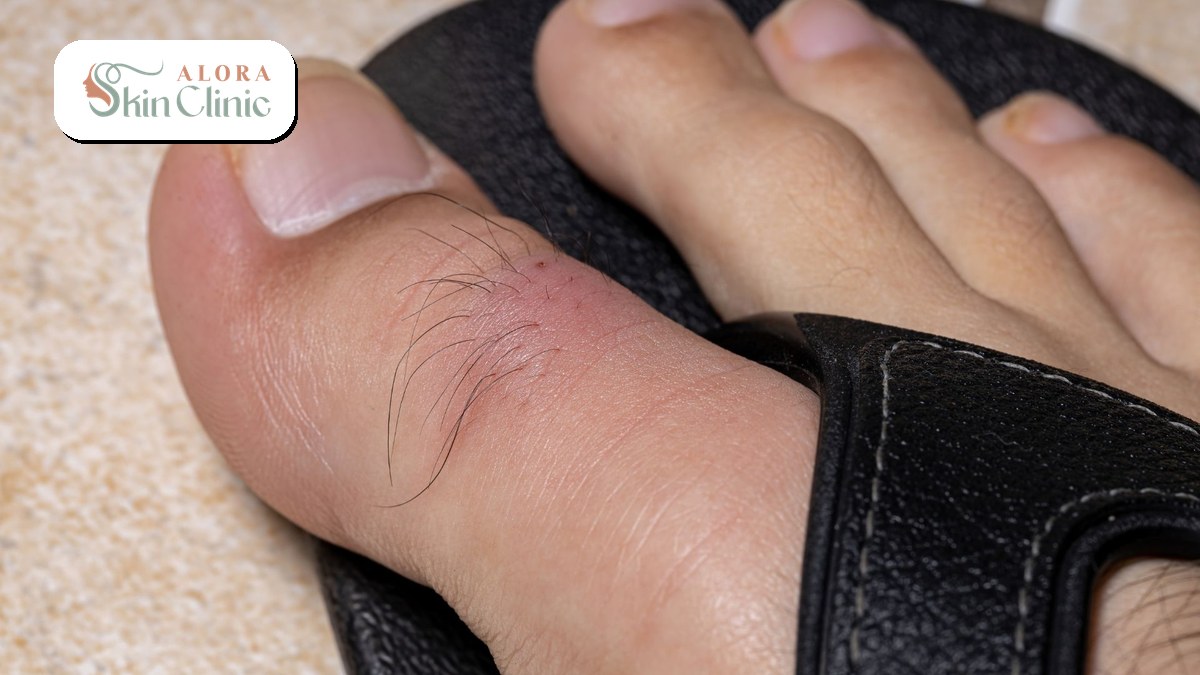
An ingrown hair is simply a hair that has grown back into the skin instead of up and out of it. Normally a hair pushes up through the follicle and out through the surface. When it curls back on itself or grows sideways and gets trapped under the skin, the body treats it as an irritant, and you get the familiar red, raised, sometimes tender bump around it.
Most of the time an ingrown hair forms right after hair removal. Shaving, waxing, and plucking all cut or pull the hair in a way that can leave a sharp tip or an empty follicle, and the new hair growing back is more likely to get stuck. Coarse, curly, or wavy hair is especially prone, because a curved hair naturally wants to loop back toward the skin as it grows.
The bump itself is inflammation. If bacteria get involved, it can become a small infected spot, and repeated ingrowns in the same area can leave dark marks or, over time, raised scarring. This is why the areas people shave and wax most often, the bikini line, legs, underarms, and the beard area, tend to be where ingrowns cluster.
Why you keep getting them
If ingrown hairs were a one-time thing, nobody would worry about them. The problem is the cycle. Every time you shave or wax, you create the exact conditions for the next crop of ingrowns, so the bumps never really get a chance to clear.
A few things make it worse. Shaving too closely, or against the direction of growth, leaves the hair tip below the surface where it can grow sideways. Waxing and plucking pull the hair out entirely, and the new hair growing back into an empty follicle often struggles to break through. Tight clothing that rubs against a freshly shaved area, and dead skin that builds up over the follicle, both make it harder for the hair to surface cleanly.
None of this means you are doing something wrong. It means the method of hair removal itself is the thing setting up the ingrowns, which is the key to understanding what actually helps.
The honest part: what actually stops ingrown hairs
We want to be straight with you here, because the aisle of bump creams and exfoliating scrubs promises more than it delivers. There is no lotion that permanently stops ingrown hairs, and no scrub that ends them for good, because as long as you keep shaving and waxing the same area, you keep creating new ones. Anyone selling a cream as a permanent fix for ingrowns is not being honest with you.
What good habits can do is real, though. Gentle, regular exfoliation helps keep the follicle clear so hairs surface more easily. Shaving with a sharp blade in the direction of growth, rather than chasing a closer shave against it, causes fewer trapped tips. Not picking at the bumps gives them a chance to settle without marks. These things genuinely reduce ingrowns, but they manage the problem rather than removing its cause. A regular professional facial for men helps here too, keeping pores and follicles clear so fewer hairs get trapped.
The cause is the hair removal itself. So the most reliable way to stop ingrown hairs is to reduce how much hair is there to grow back in the first place. Fewer hairs, growing back finer and sparser, means far fewer chances for one to curl back under the skin. That is exactly what laser hair removal is built to do.
How laser hair removal helps with ingrown hairs at Alora
Laser hair removal works differently from shaving and waxing. Instead of cutting or pulling the hair, it sends gentle pulses of light into the skin, where the pigment in each hair carries the energy down to the follicle and disables its ability to grow new hair. Over a series of sessions, the hair that returns comes back finer, sparser, and slower, and a lot of it stops coming back at all.
Because you are no longer shaving or waxing the area constantly, the thing that creates ingrown hairs is removed from the picture. Less hair, and finer hair, means fewer trapped tips and fewer bumps. Many people come to laser hair removal for smoothness and are just as happy about finally being free of the ingrowns and razor irritation that came with their old routine.
At Alora Skin Clinic in Scarborough, laser hair removal is performed personally by Naz using the medical-grade Cynosure Elite Plus, a Health Canada approved laser with built-in cooling for comfort. Every treatment begins with a consultation and a small patch test, so the settings are matched to your skin and hair before a full area is treated. Because hair grows in cycles, laser works as a short series rather than a single visit, and most people need a run of sessions spaced a few weeks apart to catch each area at the right stage. It can be done almost anywhere ingrowns tend to appear, from the bikini line and legs to the underarms and the beard and neck area. If you would like to know whether you are a good candidate, our guide on laser hair removal candidacy walks through it.
The mistakes that make ingrown hairs worse
A few very common habits quietly make ingrown hairs more stubborn, and they are easy to change.
Picking and digging at the bump is the biggest one. Trying to free the trapped hair with a needle or your nails irritates the follicle further and is the most likely way to turn a simple ingrown into an infected spot or a lasting dark mark. It almost always makes things worse.
Chasing the closest possible shave is the next one. Shaving against the grain and going over the same spot again cuts the hair below the surface, which is precisely where it can grow sideways and become ingrown. A single pass in the direction of growth with a sharp blade is kinder to the skin.
Relying on waxing and plucking to solve it is the quiet one. Both pull the whole hair out and leave an empty follicle for the new hair to struggle back into, so for people who are already prone, they often feed the cycle rather than breaking it.
And harsh, daily scrubbing is the last one. A little gentle exfoliation helps, but scrubbing hard every day inflames the skin and can make the bumps angrier, not calmer.
When an ingrown hair needs a doctor, not a treatment
One important safety point. Most ingrown hairs are a harmless nuisance, but some need medical care. If a bump becomes a large, painful, pus-filled lump, or the redness spreads and the area feels hot, or you develop a fever, that can be an infection or an abscess and should be seen by a doctor rather than treated as a cosmetic concern. Repeated crops of inflamed spots in the same area, sometimes called folliculitis, are also worth having a doctor look at. And any spot that keeps growing, changes colour, bleeds, or does not heal is not an ordinary ingrown and should be checked. A responsible clinic will always tell you when something belongs in a doctor’s office rather than ours.
Questions people ask
Can you get rid of ingrown hairs permanently?
You cannot switch them off with a cream, but you can remove the thing that causes them. Because ingrowns come from shaving and waxing, reducing the hair itself with laser hair removal is the most reliable long-term way to stop them, since finer and sparser hair has far fewer chances to grow back into the skin.
Does laser hair removal actually help with ingrown hairs?
Yes, and for many people it is the main reason they are glad they did it. By disabling follicles over a series of sessions, laser leaves less hair to grow back in, so the bumps and razor irritation that came with shaving and waxing tend to fade along with the hair.
Should I pop or dig out an ingrown hair?
It is best not to. Picking at it irritates the follicle and is the most common way an ingrown becomes infected or leaves a dark mark. Gentle exfoliation and leaving it alone usually let it settle on its own, and if it is painful or infected, see a doctor.
Why do I get ingrown hairs on my bikini line, legs, or neck?
Those are the areas most people shave and wax the most, and the hair there is often coarse or curly, which is more likely to curl back under the skin. That combination of frequent hair removal and curved hair is exactly what produces clusters of ingrowns.
How many laser sessions will I need?
Most people need a series of sessions spaced a few weeks apart, because hair grows in cycles and only the hairs in an active phase respond each time. Naz maps out a realistic plan for your hair and skin at your consultation, and occasional maintenance keeps the results going.
Ready to be done with the bumps?
Ingrown hairs are common, they are frustrating, and the cycle is genuinely hard to break with shaving and waxing alone. The good news is that the cause is understood, and reducing the hair itself is a realistic way to leave the bumps behind for good.
If you would like an honest look at your skin and a plan to finally stop the ingrowns, book a consultation with Naz at Alora Skin Clinic, 21 Glendinning Ave inside Pharmasave in Scarborough, or call or text (647) 547-0597. We will tell you what is realistic before you begin.