

If summer left a few marks on your skin, you are noticing them right about now. The freckle-like patches across your cheeks look a little deeper. An old breakout left a brown shadow that has not budged. The backs of your hands and the tops of your cheeks seem less even than they did in May. This is one of the most common things people bring to us, and there is some good news attached to it. The season that is about to begin is the best time of year to do something about it. Much of that pigment is sun damage surfacing after a season of sun.
Here is the honest version of why, what your dark spots actually are, and how to fade them in a way that lasts instead of bouncing back next summer.
Why your dark spots look worse after summer
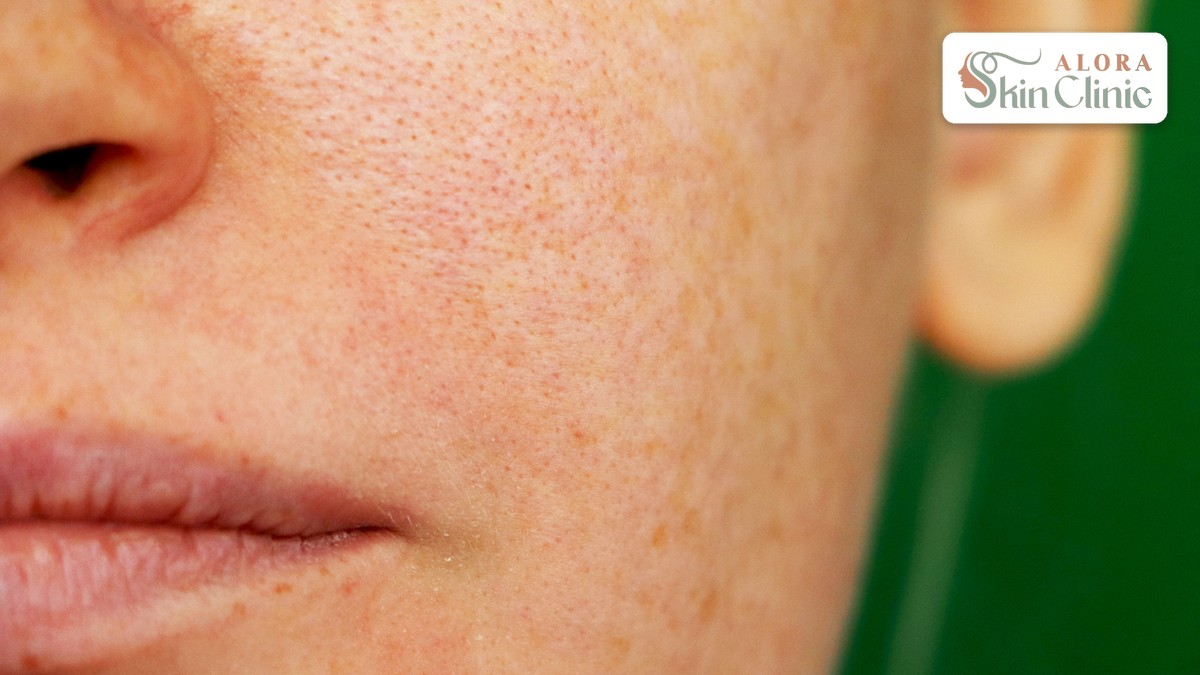
Pigmentation is simply areas of skin that have made more melanin than the skin around them, so they read as darker. It shows up as sun spots and age spots, as the brown marks left behind by old breakouts, and as a general unevenness of tone. It is extremely common, and it is one of the concerns we are asked about most.
The reason it looks worse in late summer is straightforward. Ultraviolet light is the single biggest driver of melanin. Every sunny walk, patio afternoon, and drive with your arm near the window tells your skin to make more pigment, and the spots that were already there deepen fastest. So the unevenness you are seeing now is partly the result of the last few months of sun. As the days shorten and the strong summer light fades, your skin finally gets a break from that constant trigger, which is exactly what makes the months ahead the right time to act.
Why timing matters so much with pigmentation
This is the part most people do not know, and it is the whole point of this post. Pigmentation is one of the few skin concerns where the calendar genuinely changes your results.
Most treatments that lift dark spots work by breaking up pigment and encouraging fresh, more even skin to come through. For a short window afterward, treated skin is more sensitive to the sun than usual. If it meets strong UV during that window, two things can happen. The progress you paid for can be undone, and the skin can be pushed to make new pigment, sometimes leaving you more uneven than when you started. That is why treating pigment in the peak of summer is working against the season.
In fall and winter, the sun is lower and weaker, you are covered up more often, and you simply spend less time in direct light. That calmer environment gives treated skin the space to settle and the pigment time to fade without being provoked again. Starting now also means that by the time next spring and summer arrive, your skin is even and your results are locked in, rather than being a work in progress.
Not all dark spots are the same
Fading pigment well starts with knowing what you are actually looking at, because the type changes what is realistic.
Sun spots and age spots are the flat brown patches that show up on the areas that catch the most light, like the cheeks, forehead, and hands. These are the most directly sun-driven, and they tend to respond well to a considered plan.
Post-acne marks are the brown or tan shadows left after a pimple heals. They are not scars, they are pigment, and they usually fade with time and the right support, though they fade faster with help than if you wait them out.
Melasma is the one to be honest about. It tends to appear as larger, symmetrical patches, often across the cheeks, forehead, or upper lip, and it is driven by a mix of sun, heat, and hormones. Melasma is manageable, not curable. It can be softened and kept under control, but it is easily reactivated by sun and even by heat, so it needs a gentle, patient approach and lifelong sun protection rather than a quick fix. Setting that expectation up front is part of doing this properly.
What actually fades pigmentation
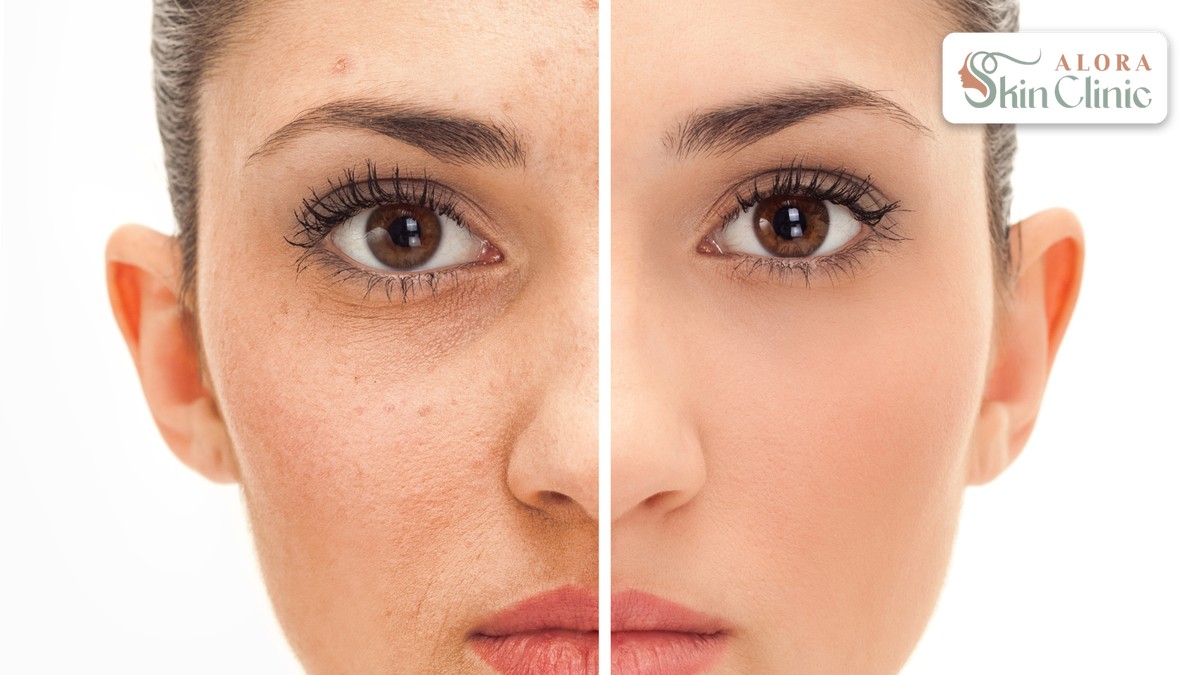
You will find plenty of lists of individual treatments, and we have written about the specific options separately. What matters more than any single device is the approach. Fading pigment that stays faded comes down to three things working together: an in-clinic plan that is matched to your skin, a simple home routine that supports it, and daily sun protection that holds the result in place.
At Alora, Naz assesses your skin first and builds a plan around what your pigment actually is and what your skin tone can safely handle, rather than reaching for one fixed treatment for everyone. You can read more about the treatment side on our pigmentation treatment page, and if you want the fuller breakdown of the options, our guide to the best treatments for hyperpigmentation walks through them.
The one habit that makes or breaks your results
If you take only one thing from this, take this. Sunscreen is not the boring afterthought of a pigment plan, it is the plan. Every treatment that fades a dark spot leaves that skin ready to make pigment again the moment it meets strong light. Daily sunscreen is what stops that from happening.
That means a broad-spectrum SPF every morning, all year, not only on beach days and not only in summer. UV comes through cloud and through car and office windows, and in a place like Scarborough that goes for grey November days as much as bright July ones. People who protect their skin daily keep their results. People who skip it tend to watch their spots slowly return, no matter how good the treatment was. Starting your treatment now, as the strong sun eases off, simply makes that protection easier to get right.
Why your skin tone matters here
Pigmentation care is not one size fits all, and this matters a great deal for deeper skin tones. Richer, melanin-rich skin is more prone to pigment in the first place, and it can also react to treatment that is too aggressive by making more pigment rather than less. That is not a reason to avoid treatment. It is the reason to have it done by someone who assesses your skin carefully and matches the approach to your tone.
This is a real part of how we work, and it matters in a community as diverse as ours. The goal is steady, safe fading, not a harsh result that trades one kind of unevenness for another.
How we approach pigmentation at Alora
Our process is simple and honest. First we assess and plan, which means Naz looks closely at your skin, explains what your pigment likely is, and sets realistic expectations before anything begins. Then we move to a targeted session matched to your skin and your goals. After that comes the fade and protect phase, where the pigment lightens gradually and daily sun protection keeps it that way.
A couple of honest notes come with that. Pigment fades over weeks, not overnight, and often over a short series rather than a single visit, so patience is part of the plan. And pricing is kept clear and given to you at the consultation, so you know what to expect before you commit to anything.
When a dark spot needs a doctor, not a facial
One important safety point. Cosmetic pigmentation is flat, stable, and even in colour. If you have a spot that is new, changing, growing, has an irregular border or uneven colour, itches, or bleeds, that is not something to treat as a cosmetic concern. Please have it looked at by a doctor or dermatologist first. A responsible clinic will always tell you when something belongs in a doctor’s office rather than ours.
Questions people ask
Why is fall really better than summer for this?
Because treated skin is briefly more sensitive to the sun, and strong summer light can undo your progress or trigger new pigment. The lower, weaker sun of fall and winter gives your skin the calm it needs to fade evenly and hold the result.
How long until my dark spots fade?
It depends on the type and depth of the pigment and how your skin responds, so we do not promise a fixed timeline. Many people see gradual improvement over a series of weeks, with the plan adjusted as your skin changes.
Will the spots come back?
Sun-driven spots can return if the skin is not protected, which is why daily sunscreen is part of the plan and not optional. Melasma in particular is managed rather than cured and can be reactivated by sun and heat, so it needs ongoing care.
Is treating pigment safe for deeper skin tones?
Yes, when it is matched to your skin. Deeper tones need a careful, correctly chosen approach to avoid making pigment worse, which is exactly why the assessment comes first.
Can you treat melasma?
We can help soften and manage melasma, and we will be honest that it is a long game rather than a one-time fix. Steady care and strict sun protection are what keep it under control.
Ready to even things out before spring?
The dark spots summer left behind are common, and they are treatable, and the window to do it well is opening right now. Start in the calmer months and your skin can be even and settled by the time the strong sun returns.
If you would like an honest look at your skin and a plan matched to your tone, book a pigmentation consultation at Alora Skin Clinic, 21 Glendinning Ave inside Pharmasave in Scarborough, or call (647) 547-0597. We will tell you what is realistic before you begin.