
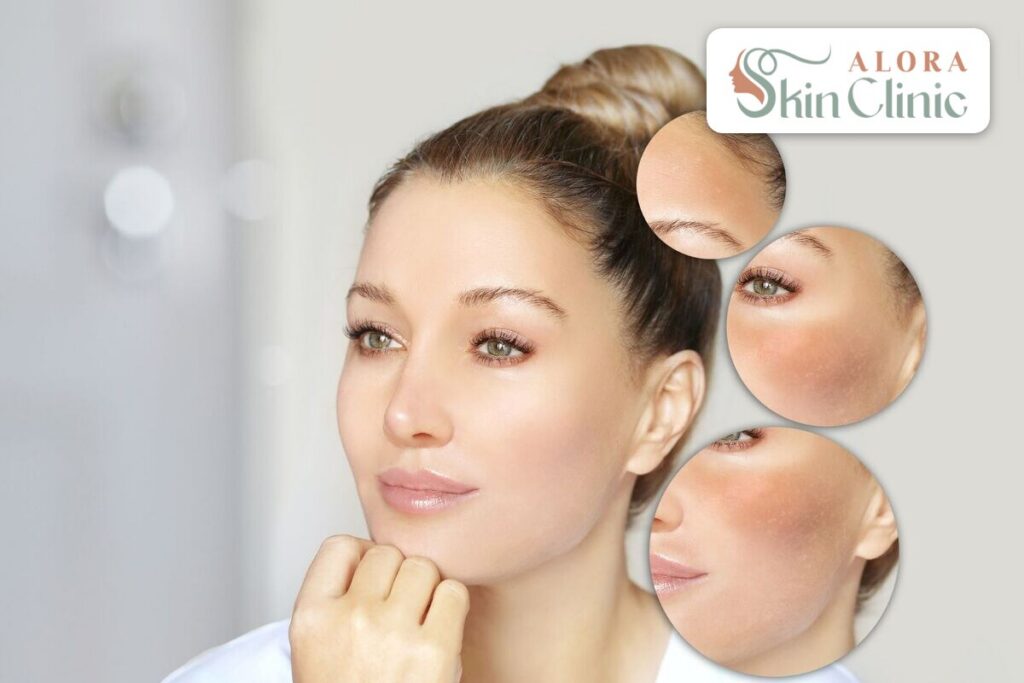
Most people who ask us about dark spots have been looking at the same patch in the mirror for a while. A scatter of brown spots across the cheeks that the sun left behind, a shadow that stayed after a pimple healed, or a hazy patch on the forehead and upper lip that seems to darken every summer. Hyperpigmentation is one of the most common things we see in Scarborough, and it is one of the most misunderstood.
That is because it is also an area where honesty matters more than sales. Some pigmentation fades beautifully with the right plan. Some of it, melasma in particular, is managed rather than cured. And in deeper skin tones, the wrong or overly aggressive treatment can make it worse, not better. This guide walks through all of it, so you know exactly what to expect before you book.
What hyperpigmentation actually is
Hyperpigmentation simply means an area of skin that has made extra melanin, the pigment that gives skin its colour, so it looks darker than the skin around it. It is almost always a cosmetic concern rather than a health one, but the right treatment depends entirely on which type you have. There are three common ones.
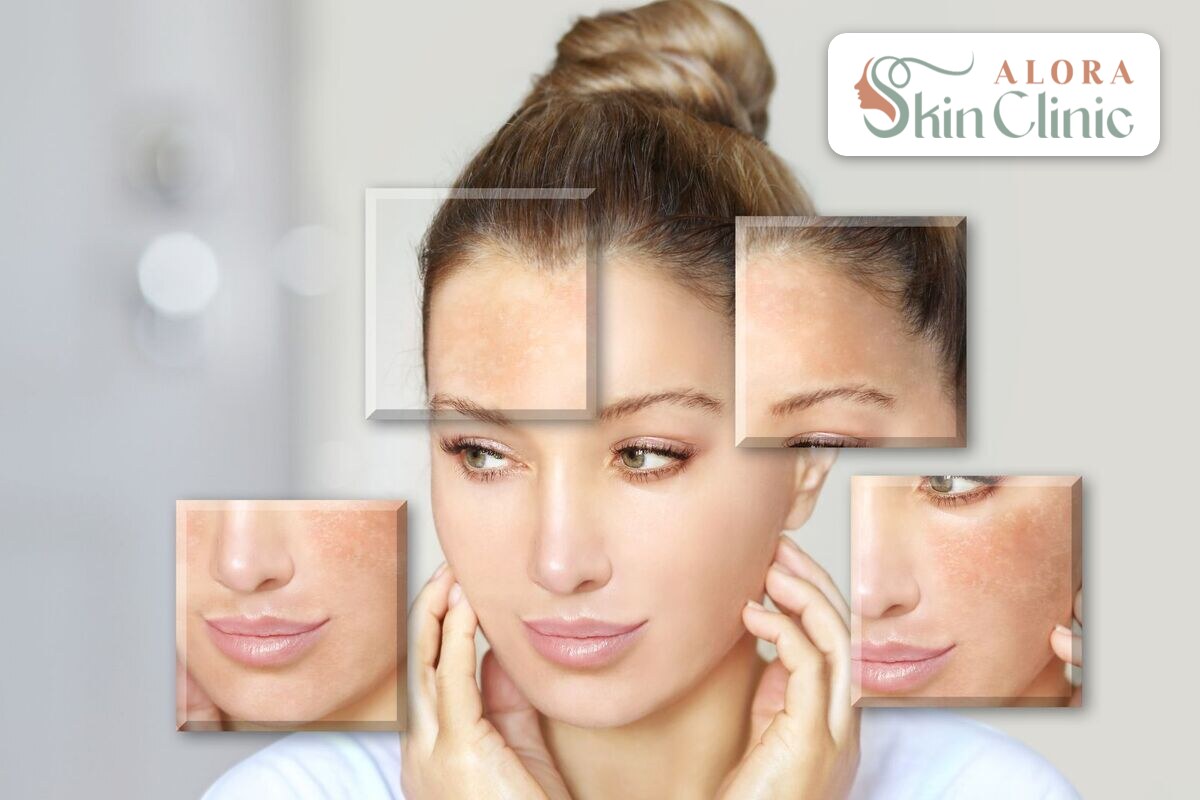
Sun spots are the flat brown marks that build up over years of sun exposure, usually on the face, chest, and backs of the hands. Post-inflammatory hyperpigmentation, or PIH, is the mark left behind after the skin has been inflamed, most often from acne, but also from a bug bite, a scratch, or a harsh product. It is extremely common in deeper skin tones, because more active pigment cells respond strongly to any irritation. Melasma is the hazy, symmetrical patchiness that tends to show up on the cheeks, forehead, and upper lip, driven by a mix of hormones, heat, and sun, and it is the most stubborn of the three.
Knowing which one you are dealing with is the whole game, because it changes what treatment can realistically do.
What treatment can and cannot do
This is the most important section, so we will be direct. The single most powerful thing for any kind of hyperpigmentation is not a treatment at all, it is daily sun protection. Melanin is triggered by UV and even by visible light and heat, so without consistent sunscreen, every dark spot you fade will simply be replaced by a new one. No facial, no microneedling series, and no product will hold if the sun is left out of the picture. We say this first because it is the part people most want to skip, and it is the part that decides whether anything else works.
With that foundation in place, the in-clinic treatments genuinely help. They work by lifting away pigmented surface cells and by nudging the skin to renew itself faster and more evenly, so pigment clears over a series of sessions rather than all at once. What they can do is soften and even out sun spots and acne marks over time, and brighten the overall tone of the skin. What they cannot do is erase a spot in a single visit, and they cannot promise to make melasma disappear, because melasma sits deeper and tends to return with sun and hormones. With melasma, the honest goal is control and a lighter, more even look that you maintain, not a one-time cure.
How we approach it at Alora
There is no single fix, and the plan depends on your skin and the type of pigmentation you have, which is why every plan starts with an assessment rather than a booking. From our menu, a few treatments do most of the work for pigmentation.
Brightening facials are the gentle starting point. A tailored facial, including our anti-acne facial when the marks are left over from breakouts, cleans, exfoliates, and brightens the skin, and it is a comfortable way to begin evening out tone without much intensity.
A HydraFacial adds deep exfoliation and a brightening lean. It resurfaces and hydrates in one session, which lifts dull, pigmented surface cells and gives an immediate glow, and it suits most skin types well as part of a longer plan.
Microneedling and meso-microneedling work deeper, over a series. By stimulating your own collagen and speeding skin renewal, microneedling helps improve uneven pigmentation and texture at the same time, which makes it a strong option for acne-related marks. It is done carefully and conservatively, especially in deeper skin tones, for the reason we explain next.
Alongside whichever treatment suits you, the results are held in place by a simple, consistent home routine and, above all, daily sunscreen.
Does it suit your skin
This is where deeper skin tones need real care, and we take it seriously. The same active pigment cells that make PIH and melasma so common in richer skin tones also mean the skin can react to aggressive treatment by making even more pigment, the opposite of what you came in for. Heat, harsh exfoliation, and overly strong settings are exactly what a darker complexion does not need.
So our approach for deeper skin tones is deliberately gentle and gradual. We assess your skin first, favour the milder treatments and conservative settings, and build results slowly rather than chasing them in one intense session. If your skin is easily irritated or prone to marking, we will say so and plan around it. Even, brighter skin is the goal, and never at the cost of a fresh patch of pigment.
How many sessions, downtime, and results honestly
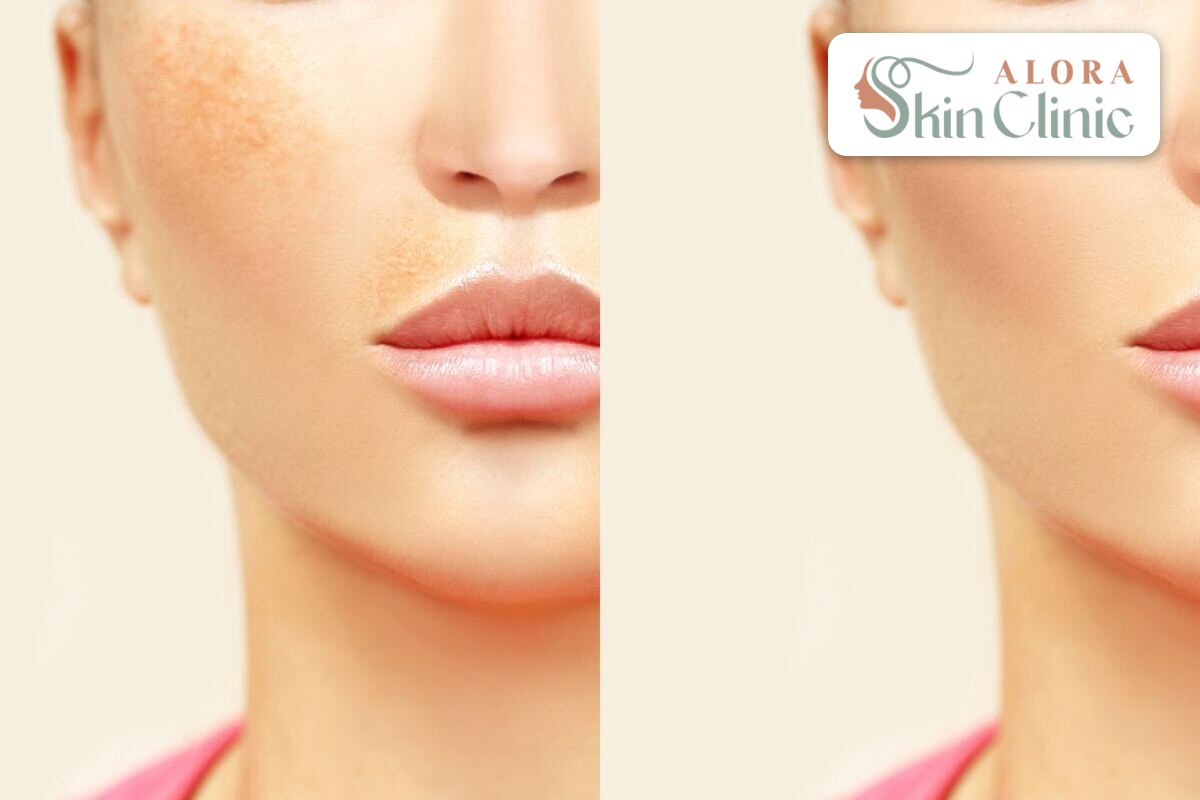
Pigmentation fades gradually, it does not vanish on the spot. Facials and a HydraFacial give an immediate freshness and glow, but the real evening-out of dark spots happens over a series of sessions spaced a few weeks apart, as the skin renews. Microneedling in particular is a course, not a one-off.
Downtime is usually minimal. A facial or HydraFacial leaves you ready to walk straight back into your day, perhaps a little pink for an hour or two. Microneedling can leave the skin flushed and sensitive for a day or so. In every case the treated skin is temporarily more prone to picking up pigment, which is the whole reason sun protection afterward is non negotiable.
The honest headline on results is this: fewer visible spots, a more even and brighter tone, and a plan to keep it that way. If someone promises to erase your pigmentation in one session, be cautious, because that is not how skin works, and it is often how skin gets damaged.
When a dark spot is more than a cosmetic concern
Almost all hyperpigmentation is harmless. The exception worth knowing is a spot that is genuinely new or changing. A mark that is growing, has an irregular or ragged border, is made up of more than one colour, is larger than a pencil eraser, or that itches, bleeds, or crusts, is not something to treat as a cosmetic spot. That deserves a proper look from a doctor or dermatologist to rule anything out first. If you are ever unsure, get it checked before booking a cosmetic treatment. You can read a plain-language overview of dark spots in deeper skin tones from the American Academy of Dermatology.
Pricing and booking
Pigmentation treatment at Alora is priced by the treatment, so you only pay for what your plan needs. As a guide, our facials start at $89, the anti-acne facial at $119, microdermabrasion at $99, and a HydraFacial at $139, while microneedling is a more advanced treatment that starts at $300. You can see the full price list any time, and you will always know the exact cost of your plan at your consultation, before anything is booked.
If dark spots or uneven tone have been bothering you, the easiest first step is a quick assessment. We will look at your skin, tell you honestly which type of pigmentation you have and what is realistic, and build a plan around it, gently and at a pace that suits your skin.
Call 647-547-0597 or book a consultation at our Scarborough clinic.
General information, not medical advice. A consultation is needed to confirm which type of pigmentation you have and whether these cosmetic treatments are suited to your skin.
Frequently asked questions
Can hyperpigmentation be removed permanently?
Sun spots and acne marks can be faded significantly and often kept clear with the right plan and daily sun protection. Melasma is different: it is managed and lightened rather than permanently cured, because it tends to return with sun and hormones.
Why do my dark spots keep coming back?
Almost always because of sun exposure. UV light and heat trigger the pigment cells, so without consistent sunscreen, faded spots are simply replaced by new ones. Daily SPF is the single most important step.
Is treatment safe for deeper skin tones?
Yes, with care. Because richer skin tones can react to aggressive treatment by making more pigment, we favour gentle treatments and conservative settings, assess your skin first, and build results gradually.
How many sessions will I need?
Pigmentation clears over a series, not in one visit. Facials and HydraFacials are usually done in a course spaced a few weeks apart, and microneedling is a short series. Your consultation is where we give you a realistic number for your skin.
What is the most important thing I can do at home?
Wear sunscreen every day and reapply it, and keep a simple, consistent routine. Sun protection is what makes every in-clinic result last.