Most people who ask us about spider veins have been quietly bothered by them for a while. A little cluster of red lines that has crept in beside the nose, a fine purple web on the cheek, or a small patch on the leg that shows up under shorts. They are extremely common, they are almost always harmless, and you do not have to live with them if you would rather not see them.
That said, spider vein treatment is one of those areas where honesty matters more than sales. It works beautifully for small surface veins, and it is the wrong tool for a bulging leg vein that aches. This guide walks through both, so you know exactly what to expect before you book.
What spider veins actually are
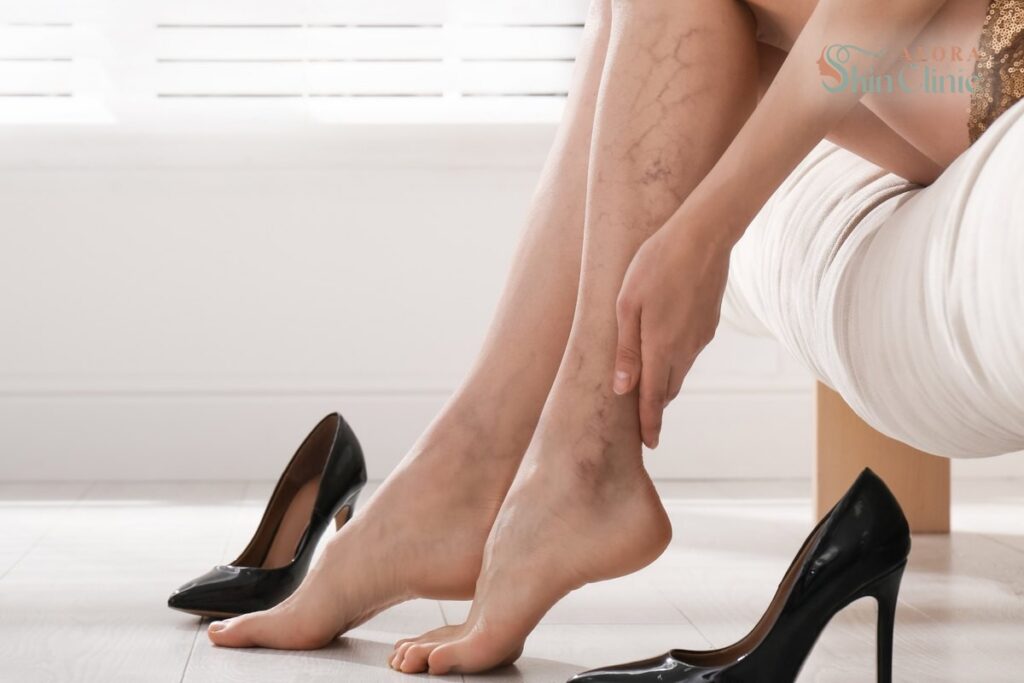
Spider veins are tiny blood vessels that sit close to the surface of the skin and show through as fine red, blue, or purple lines. They earn the name because a cluster can look a little like a spider web or the branches of a tree. They most often turn up on the face, especially around the nose and on the cheeks, and on the legs. On the face they are usually tied to sun exposure, flushing, or simply thin, fair skin. On the legs they tend to come from pressure in the small surface veins over time, with genetics, hormones, pregnancy, and a lot of standing all playing a part.
The important thing to hold onto is that surface spider veins are a cosmetic thing, not a health problem. Many people leave them alone, and that is perfectly fine. Treatment is simply an option if you would prefer clearer, more even looking skin.
How the treatment works
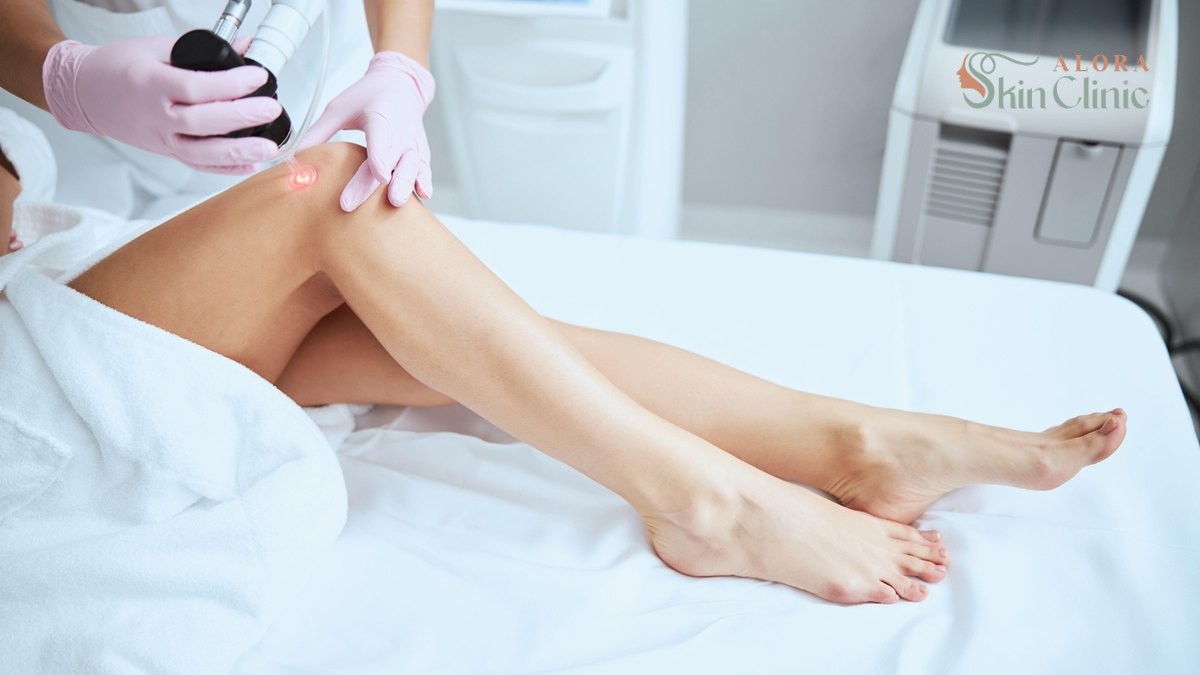
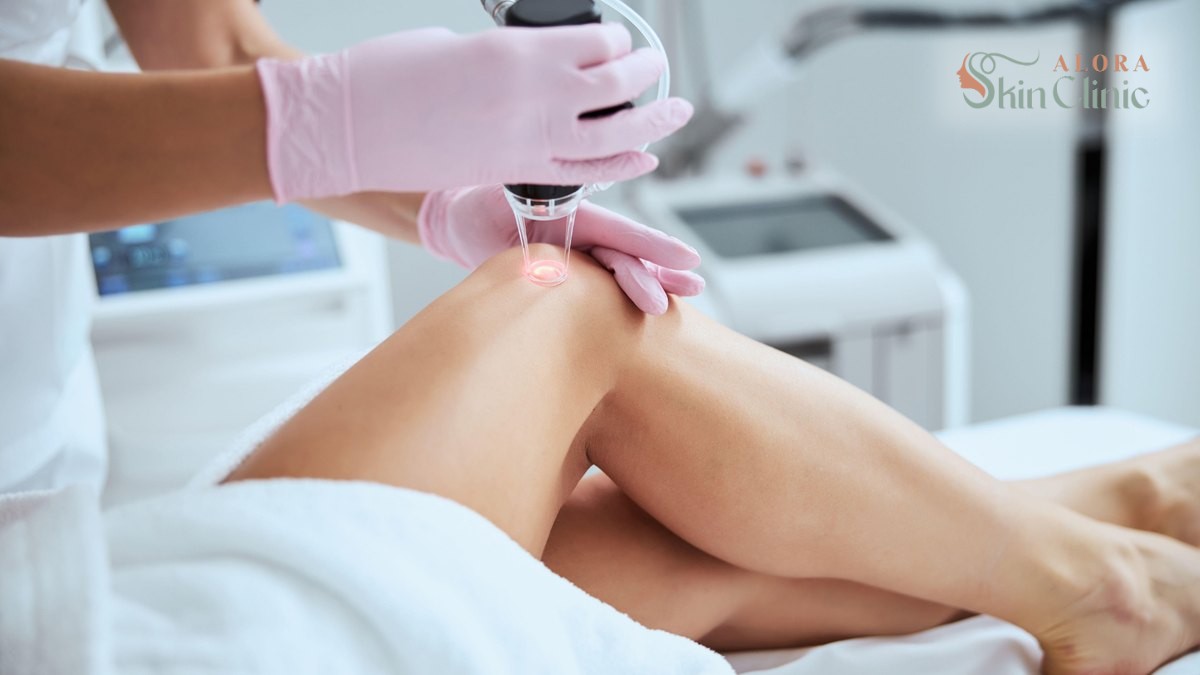
At Alora, spider vein treatment uses focused light energy directed at each visible vessel. The vessel absorbs the energy and closes, and over the following weeks your body quietly clears the treated vein away so it fades from view. There are no incisions and no needles going into the skin. It is a non-surgical, surface level treatment.
The visit itself is short and follows three simple steps:
- Assess and plan. Naz looks closely at the veins and your skin, answers your questions, and sets the treatment to a comfortable level for the area.
- Targeted session. Each visible vessel is treated one at a time. You feel a brief warm snap as the vessel is closed. Small areas are often done in minutes.
- Fade and protect. The treated vessels fade over the following weeks. You get simple aftercare, sun protection above all, and a plan for any further sessions if the area needs them.
A typical session runs around twenty minutes or so, depending on how much there is to treat, and most people head straight back to their day afterward.
What it can and cannot do
This is the most important section, so we will be direct. This treatment is for small, flat veins that sit at the surface. It is a cosmetic treatment, done by a medical aesthetician, and it is genuinely good at what it does.
It is not the right treatment, and not something we will attempt, for larger vein problems. If you have leg veins that are raised, rope like, or bulging, or veins that come with aching, heaviness, swelling, itching, or skin changes around the ankle, that points to something happening deeper in the venous system rather than at the surface. Those signs deserve a proper medical assessment.
In that situation the right next step is a vein clinic or a physician who focuses on veins. They can look below the surface with ultrasound and treat the underlying cause, which a surface treatment cannot reach. If you come to us and your veins look like that, we will tell you plainly and point you in the right direction rather than treat the surface and leave the real issue untouched.
Does it suit your skin
Light based treatments and deeper skin tones need extra care, and we take that seriously. Because the treatment works by targeting colour in the vessel, the settings and suitability depend on your skin as much as the veins themselves.
That is why every treatment starts with an assessment rather than a booking. For deeper skin tones we work conservatively, sometimes with a small test area first, and if we do not think it is the safe or right approach for your skin, we will say so and talk through the alternative. Clear skin is the goal, and never at the cost of a burn or a patch of uneven colour.
Comfort, downtime, and how many sessions
The sensation is mild. Most people describe a brief, warm snap as each vessel is treated, a little like a light flick. There is no numbing needed for most areas, and we pause whenever you want us to.
Afterward, expect some brief redness and perhaps mild swelling around the treated spots, which usually settles within a day or two. On the legs you may occasionally see a tiny scab or a bit of light bruising as a vessel clears, and that fades over the following days. Sun protection is the one non negotiable, before and after, because fresh treated skin is more prone to picking up pigment.
How many sessions you need depends on the area. Fine facial veins around the nose often respond in one or two sessions. Small leg clusters tend to be more stubborn and may need a short series spaced a few weeks apart. Your consultation is where we give you a realistic number for your specific veins, rather than a one size fits all promise.
Results, honestly
The single thing to understand is that spider veins fade, they do not vanish on the spot. In the days right after treatment a vessel may look a touch darker or simply the same, and then over two to several weeks it quietly clears as your body reabsorbs it. It is a gradual reveal, not an instant erase.
Once a vessel is properly treated and gone, it tends to stay gone. What treatment cannot do is stop new spider veins from forming, because the things that cause them, genetics, sun, hormones, and time, carry on. Many people find that an occasional touch up every so often keeps things looking clear, in the same way you would top up any other bit of upkeep. The most common misconception we gently correct is the expectation of one and done perfection. Realistic is better: fewer visible veins, clearer looking skin, and a simple plan to keep it that way.
Pricing and booking
Spider vein treatment at Alora is priced by the size of the area being treated, so you only pay for what you need. As a guide, a small area up to five by five centimetres is $149, a medium area is $249, a large area is $349, and an extra large area is $449. You will always know the exact price at your consultation, before anything is booked.
If those fine red or purple lines have been bothering you, the easiest first step is a quick assessment. We will look at the veins, confirm whether this treatment suits them, and either make a plan or, if the veins call for a vein doctor, point you the right way. You can also explore our other light based treatments while you are here.
Call 647-547-0597 or book a consultation at our Scarborough clinic.
General information, not medical advice. A consultation is needed to confirm whether your veins are suited to this cosmetic treatment.
Frequently asked questions
Are spider veins dangerous?
Surface spider veins are almost always harmless and cosmetic. That said, larger bulging veins or veins that ache, swell, or feel heavy can point to something deeper and deserve a medical assessment from a vein doctor.
Does the treatment hurt?
Most people feel a brief, warm snap as each vessel is treated, a little like a light flick. Any redness or mild swelling usually settles within a day or two.
How many sessions will I need?
It depends on the area. Fine facial veins often respond in one or two sessions, while small leg clusters can need a short series. Your consultation is where we give you a realistic number.
Will the veins come back?
A properly treated vessel tends to stay gone. Treatment cannot stop new spider veins from forming over time, so occasional touch ups help keep things looking clear.
Is it suitable for deeper skin tones?
It can be, with care. Because the treatment targets colour, we assess your skin first, work conservatively, and if it is not the right approach for your skin we will say so and talk through alternatives.