
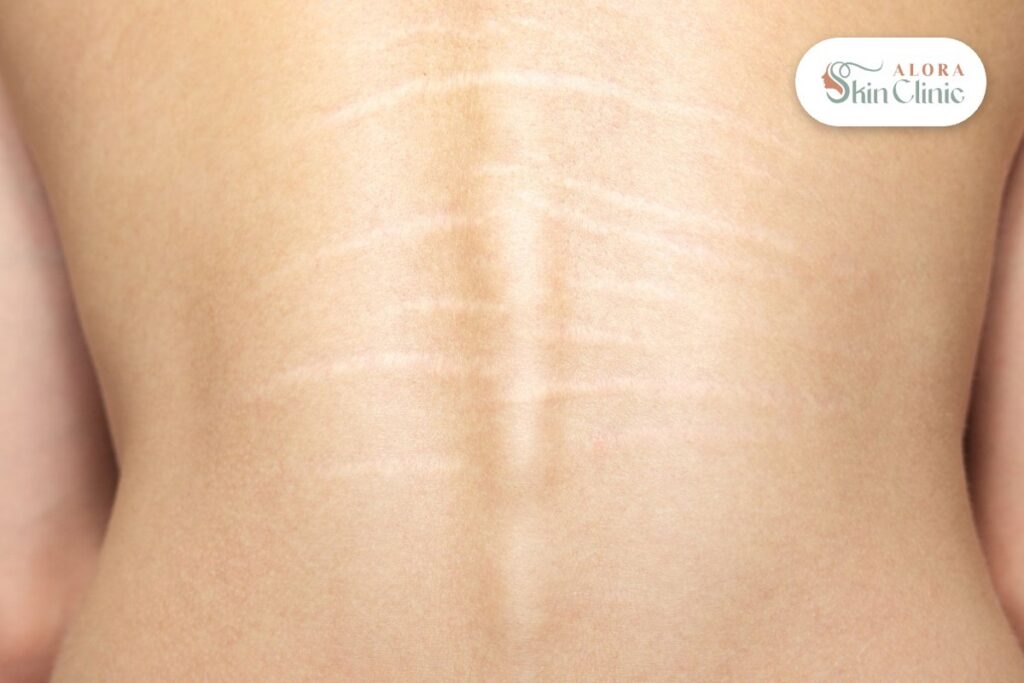
You catch them in a certain light, across the hips, the stomach, the thighs, or the upper arms: those fine lines in the skin that were not there before. Maybe they came with a growth spurt years ago, or a pregnancy, or a change in weight, or a stretch of time in the gym. At first they may have looked pink, red, or purple, and now some of them have faded to a pale silver. Stretch marks are one of the most common things people ask us about, and one of the most oversold. Almost every cream and oil aimed at them promises to erase them, and almost none of them can. Understanding what a stretch mark actually is changes what you should expect from any treatment.
Here is the honest version of why stretch marks form, why nothing fully erases them, and what genuinely makes them look smoother and less obvious.
What a stretch mark actually is
A stretch mark is a small scar that forms deep in the skin. When the skin is stretched faster than it can keep up with, the supportive network of collagen and elastin in the middle layer, the dermis, tears in places. The mark you see on the surface is the sign of that healed tear underneath. This is why a stretch mark is not the same as a patch of dryness or a surface blemish, and it is why a product that only sits on top of the skin has so little effect. The change it would need to reach is not on the surface at all.
Stretch marks show up wherever skin stretches quickly, which is why the stomach, hips, thighs, breasts, and upper arms are the usual places. They are extremely common, they happen to people of every body type, and having them is not a sign that you did anything wrong or failed to care for your skin.
Why they change colour, and why that matters
Stretch marks go through stages, and the stage yours are in is the single biggest thing that decides how much they can improve.
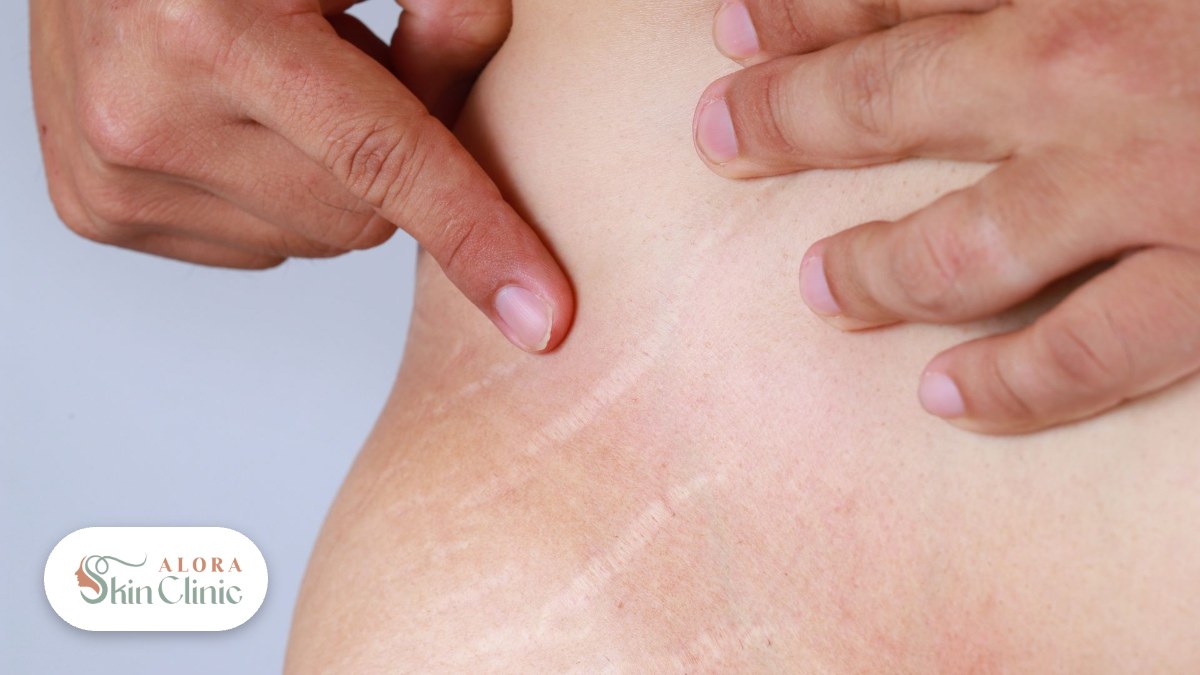
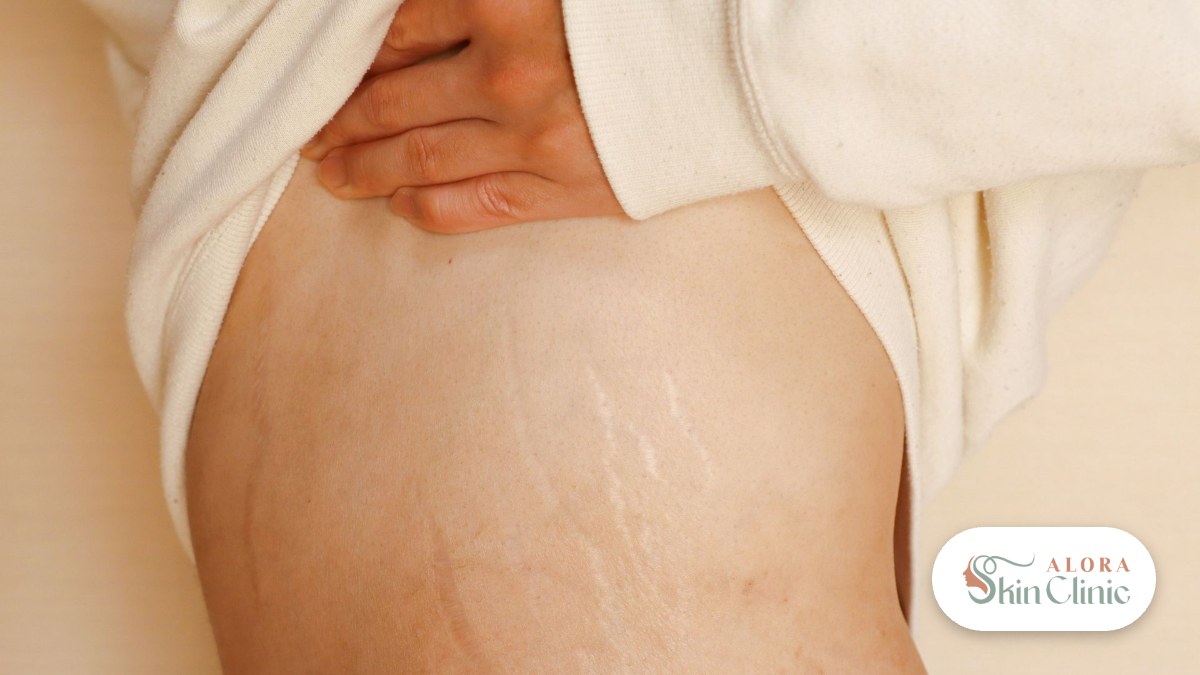
New stretch marks tend to look pink, red, or purple. At this stage there is still active blood flow and inflammation in the area, the skin is still remodelling, and the marks are more responsive to treatment. This is the better window to work on them.
Older stretch marks fade over time to a pale white or silver, and they can look slightly sunken or shiny. At this stage the mark is mature and settled, and while its appearance can still be improved, it is harder to change than a fresh one. This is the honest reason two people can get very different results from the same treatment. It often comes down to how old the marks are.
The honest part: what treatment can and cannot do
We want to be straight with you, because the stretch-mark aisle is full of promises the skin cannot keep. No cream, oil, treatment, or device completely erases a stretch mark, because it is a scar in the deeper layer of the skin, not a stain on the surface. Anyone selling you total removal is not being honest with you.
What good treatment can genuinely do is real and worth having. It can soften how deep and textured the marks feel, blend their colour closer to the surrounding skin, and make them far less noticeable, especially when they are treated while they are still newer. The realistic goal is skin where the marks fade into the background rather than skin with no trace they were ever there. For most people, that is a reachable and satisfying result.
What actually helps fade stretch marks
Because a stretch mark is a problem in the collagen and elastin of the deeper skin, the help has to reach that layer and encourage it to rebuild, rather than simply moisturise the top.
This is where microneedling fits the problem well. Microneedling uses very fine needles to create tiny controlled channels in the skin, which prompts the body to produce fresh collagen and elastin as it responds. Over a series of sessions, that new collagen can improve the texture and firmness of the marked skin and soften how obvious the lines look. It works gradually rather than overnight, which is exactly how honest collagen building goes, and it tends to do more for newer marks than for very old ones. Because the right plan depends entirely on your skin, Naz looks at where your marks are, how old they are, and your skin type before suggesting how many sessions make sense.
Supportive habits help the result hold. Keeping the skin well hydrated and protected supports healing between sessions, and daily sun protection matters because sun exposure on a stretch mark can make the discolouration more stubborn and slower to blend.
The mistakes that keep stretch marks looking worse
A few common habits quietly work against you, and they are easy to change.
Waiting too long is the big one. Because newer, coloured marks respond better than old white ones, leaving them for years before doing anything makes the job harder. If your marks are still pink or purple, that is the better time to look at them.
Expecting one session to erase them is the next one. Collagen building is gradual and works over a series, so a single appointment will not transform mature marks, and any place that promises it will is not being straight with you.
Aggressive at-home rolling is another. Deep dermarolling devices bought online and used without training can injure the skin, cause marks or infection, and make the area look worse. In-clinic treatment with proper depth, hygiene, and assessment is a different thing entirely.
And skipping sun protection is the quiet one. Letting the marks tan or burn deepens their colour difference from the skin around them, which is the opposite of blending them in.
How we approach stretch marks at Alora
Our process is simple and honest. First Naz looks at your skin and your marks, because their age, colour, location, and your skin type all change what is realistic and how a plan should be built. Then we match the approach to that, rather than offering one fixed treatment to everyone. And we are clear from the start about what to expect, which means softer, more blended marks rather than a promise that they will disappear.
A couple of honest notes come with that. Deeper skin tones can be treated, but the settings and a patch test matter to keep the pigment even, which is part of why the assessment comes first. Results build gradually over a series, the newer your marks the better they tend to respond, and pricing is given to you clearly at the consultation so you know what to expect before you commit to anything.
When stretch marks need a doctor, not a facial
One important safety point. Ordinary stretch marks are a cosmetic concern and not a medical problem. But if a lot of wide purple or red stretch marks appear quickly without an obvious reason such as pregnancy or a growth spurt, especially alongside rapid weight gain, easy bruising, or muscle weakness, that is worth having a doctor check, because it can occasionally point to an underlying medical cause. And as always, any spot or lesion that is growing, changing colour, bleeding, crusting, or not healing is not a stretch mark and should be seen by a doctor. A responsible clinic will always tell you when something belongs in a doctor’s office rather than ours.
Questions people ask
Can stretch marks be removed completely?
No, and anyone who says otherwise is not being honest. A stretch mark is a scar in the deeper skin. What treatment can do is improve its texture and colour and make it much less noticeable, especially while the mark is still new.
Do stretch marks respond better when they are new?
Yes. Pink, red, or purple marks are still remodelling and tend to respond better than old white or silver ones. If yours are still coloured, that is a good time to look at them.
Will creams and oils get rid of them?
Creams and oils can keep the skin comfortable and hydrated, but they mostly act on the surface, while a stretch mark sits in the deeper layer. That is why they do so little for the mark itself. Treatments that reach the deeper skin and build collagen do more.
Is microneedling safe for stretch marks on darker skin?
It can be suitable, but the settings and a patch test matter on deeper skin tones to keep the pigment even. This is exactly why Naz assesses your skin before starting rather than using one setting for everyone.
How long until I see a difference?
It builds gradually over a series of sessions rather than after one, and newer marks tend to change faster than old ones. We do not promise a fixed timeline, because it depends on your skin and your marks.
Ready to soften those marks?
Stretch marks are common, they are not a flaw, and while nothing erases them completely, the right approach can make them look smoother and far less obvious, especially when they are treated early. The first step is simply an honest look at what stage your marks are in and what is realistic for your skin.
If you would like that honest look and a plan suited to your skin, book a consultation at Alora Skin Clinic, 21 Glendinning Ave inside Pharmasave in Scarborough, or call (647) 547-0597. We will tell you what is realistic before you begin.