
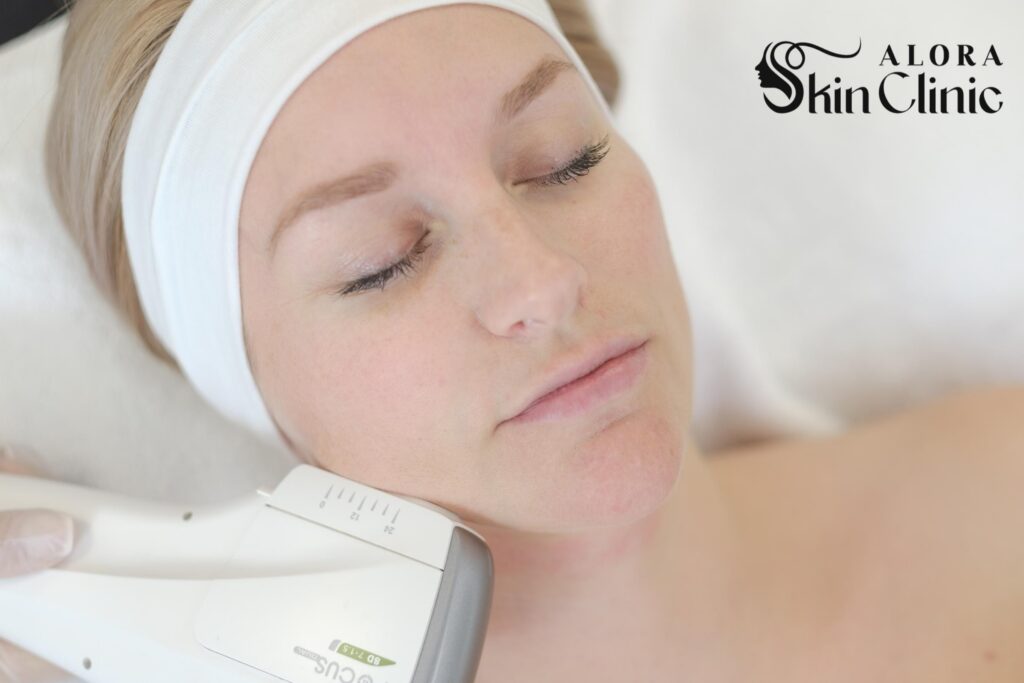
Does HIFU Really Work? A Scarborough Guide to Non-Surgical Skin Tightening
If you have started noticing a softer jawline, a little looseness under the chin, or skin that just looks more tired than it used to, you have probably wondered whether there is a way to firm things up without surgery. HIFU is one of the most popular non-surgical options for exactly that. This guide explains what HIFU really does, who it helps, what results to expect, and how it compares to treatments like Botox, fillers, and a surgical facelift.
What is HIFU, and how does it work?
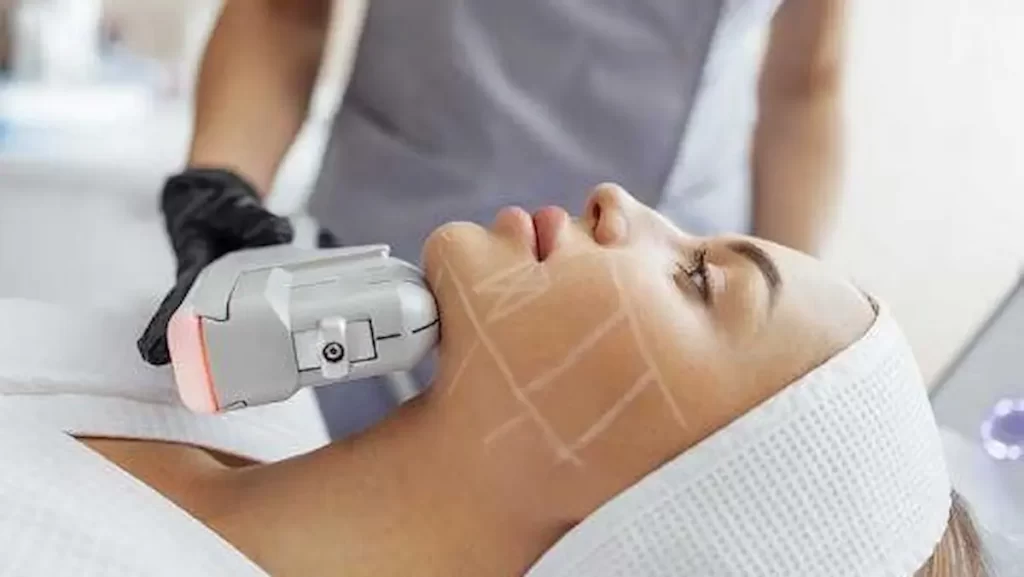
HIFU stands for High-Intensity Focused Ultrasound. It uses focused ultrasound energy that travels beneath the surface of the skin to stimulate collagen in the deeper layers, the same layers a surgeon addresses in a facelift, but without any cutting or needles. As your body responds, it produces fresh collagen that gradually firms, tightens, and lifts the skin from within.
Because it works by rebuilding your own collagen, HIFU offers a natural, gradual result rather than an instant change. That is also why people love how subtle it looks: you end up looking like a more refreshed version of yourself, not like you have had work done.
Does HIFU actually work?
Yes, for the right candidate. HIFU is well suited to mild and moderate skin laxity, the early-to-middle stages of sagging where skin is loosening but has not collapsed into heavy folds. For those cases it reliably delivers firmer, more defined, lifted-looking skin over a couple of months.
What it is not is a surgical facelift. Someone with very advanced, heavy sagging will get more limited results and is usually better served by surgical options. Honest expectations are everything here, which is why a proper assessment comes first.
Who is HIFU for?
The ideal HIFU patient is someone noticing the first signs of skin laxity who is not ready for surgery. Most are in their late thirties through their fifties, when firmness fades and collagen production naturally slows. They want to look refreshed and lifted without needles, downtime, or going under the knife, essentially a natural facelift alternative that still looks like them.
The concerns that bring people in are usually around the lower face and neck:
- A softening or sagging jawline and the beginnings of jowls
- Loose or crepey skin on the neck
- A drooping or heavy brow
- An overall loss of tightness that makes the face look tired
We also see younger clients in their early thirties who come in for prevention, wanting to stay ahead of sagging and keep their skin firm for longer, as well as clients who have lost weight or are past pregnancy and want to restore some of the tightness they used to have.
What areas can HIFU treat?
At our Alora Skin Clinic in Scarborough, the areas we most commonly treat with HIFU are the jawline, under the chin, the brow, the neck, and the décolletage. These can be treated on their own or combined for an overall lift, which is part of why HIFU is priced per area rather than as a single flat fee.
What a HIFU treatment at Alora involves
Every HIFU treatment starts with a consultation and skin assessment, not the machine. We look at your skin, talk through what is bothering you and what you want to achieve, and confirm HIFU is the right fit before we begin. The treatment should be matched to your concerns, never sold as one size fits all.
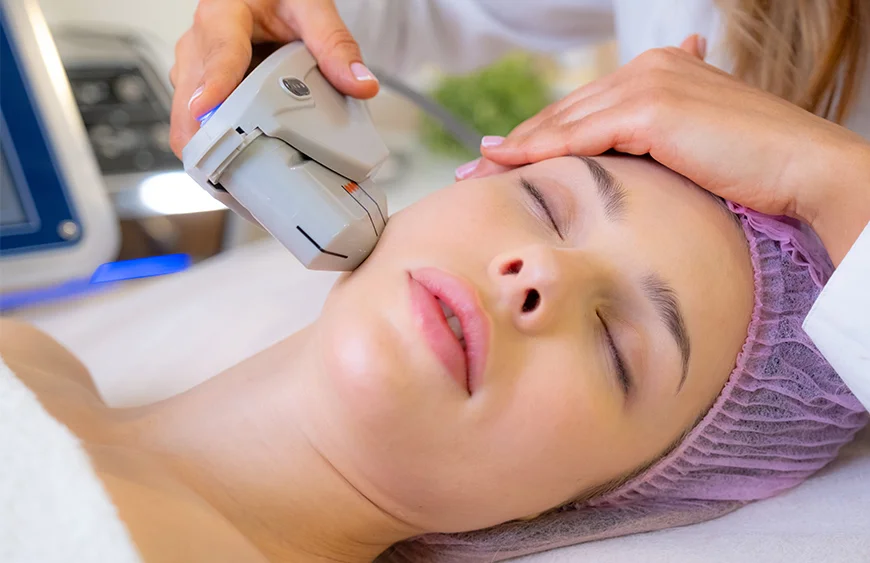
During the treatment, focused ultrasound energy is delivered beneath the skin. Most people feel some warmth and small tingling sensations, not real pain, and then go straight back to their day with no real downtime. A session usually runs about thirty to sixty minutes depending on how many areas are being treated.
What sets Alora apart is the personalized, careful approach. Clients consistently mention how much time Saharnaz takes to explain every step and keep them comfortable, which matters a lot for anyone trying HIFU for the first time. It is a small, attentive clinic rather than a high-volume factory, so you get tailored treatment and honest guidance on what HIFU can and cannot do for you.
HIFU vs Botox, fillers, and a surgical facelift
It is easy to mix these up, but they solve different problems:
- HIFU tightens and firms by rebuilding collagen in the deeper layers of the skin. It is best for mild to moderate sagging and skin laxity.
- Botox relaxes muscles to soften expression lines like frown lines and crow’s feet. It does not tighten loose skin.
- Fillers add volume to areas that have lost it, such as cheeks or lips. They plump rather than lift.
- A surgical facelift physically removes and repositions tissue. It is the most dramatic option, and the right choice for advanced, heavy sagging, but it involves surgery, downtime, and cost that HIFU does not.
Because they do different jobs, these treatments sometimes work well together. HIFU also pairs naturally with collagen-building treatments like microneedling for clients who want to work on skin quality as well as firmness.
Common HIFU myths
A few misconceptions come up again and again:
- “I will walk out with an instantly lifted face.” HIFU builds your own collagen gradually, so the real results show up over about two to three months. They are worth the wait.
- “It is painful.” Most people feel warmth and light tingling, not pain, and there is no downtime afterward.
- “It is the same as a facelift.” It lifts and tightens mild to moderate sagging, not heavy, advanced sagging.
- “One session lasts forever.” Results typically last a year or more, but skin keeps aging, so occasional maintenance keeps things looking their best.
What results to expect
One first-time client, Gloria, shared that she was impressed with her results, that HIFU helped with her wrinkles, and that she could already see a big difference in her skin. She also praised Saharnaz for being patient and walking her through every step so she felt comfortable.
Here is what a typical case looks like (a representative example, not a specific patient). A client comes in bothered by a softening jawline and a little looseness under the chin, feeling like her face looks tired even when she is rested. After a consultation, we treat the jawline and under-chin area in a single session. She feels warmth and light tingling during it, then heads back to her day right away. For the first few weeks not much looks different, which is completely normal. Around the six-to-eight-week mark she notices the area looks firmer and more defined, and by about three months the lift has fully settled in as new collagen builds.
Many people do well with a single session per area and then return for maintenance, while clients with more noticeable laxity sometimes benefit from a second session a few months later. Results generally last around a year or more, after which a maintenance treatment keeps things firm and lifted.
Is HIFU safe, and who should avoid it?
For suitable candidates, HIFU is a well-established, non-invasive treatment, and one of its biggest draws is that there is essentially no downtime. You might have mild redness or slight tenderness for a short while, but most people go straight back to their normal day. Aftercare is simple: keep the skin hydrated, wear sunscreen, and avoid anything overly harsh on the skin for a day or two.
HIFU is not for everyone. It is generally not recommended during pregnancy or breastfeeding, for people with active infections, open wounds, or severe acne in the treatment area, or for those with certain implanted electronic devices or metal implants in the area. People with very advanced, heavy sagging usually will not get the results they want from HIFU and are better suited to surgical options. We sort all of this out during the consultation so nobody books a treatment that is not right for them.
Your HIFU questions, answered
Does HIFU hurt?
Most people describe warmth and small tingling sensations as the energy is delivered, rather than real pain. There is no numbing recovery to wait out and no downtime afterward.
How long until I see results?
HIFU works gradually. Many people start noticing firmer, more defined skin around six to eight weeks, with the full lift settling in by about three months as new collagen builds.
How long do HIFU results last?
Results typically last a year or more. Because skin continues to age, an occasional maintenance treatment helps keep things looking firm and lifted.
How many sessions will I need?
Many clients do well with a single session per area, while those with more noticeable laxity may benefit from a second session a few months later. We map this out during your consultation.
Is there any downtime?
Essentially none. You may have mild redness or slight tenderness briefly, but most people return to their normal day right away.
Book your HIFU consultation in Scarborough
If you are starting to notice loosening skin and want a natural, non-surgical lift, the best first step is a consultation so we can confirm HIFU is right for you and map out the areas to treat. You can learn more about our HIFU skin tightening in Scarborough, check current pricing on our price list, and then book a consultation online or call us at (647) 547-0597. Alora Skin Clinic is located inside Pharmasave at 21 Glendinning Ave, Scarborough, ON M1W 3E2, and runs by appointment only A softening jawline and a double chin are two of the most common reasons people ask about it..