
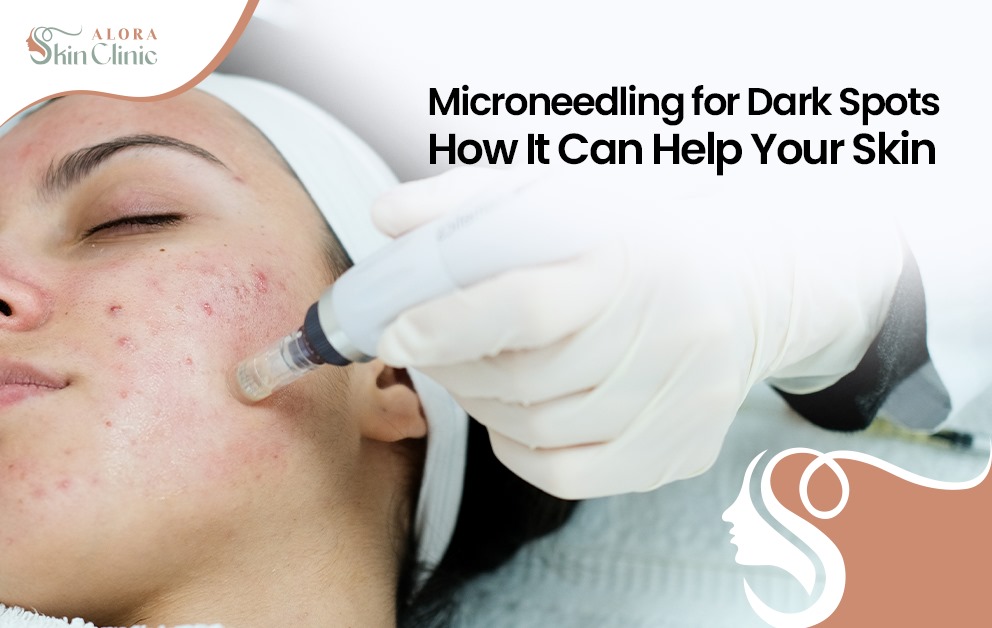
Some call them sun freckles, others say acne shadows, or pigment patches. Whatever you name them, dark spots tend to overstay their welcome, and they rarely fade without a fight.
Microneedling for dark spots works beneath the surface, harnessing your skin’s natural healing process to combat discoloration.
What Causes Dark Spots and Hyperpigmentation?
Here’s the deal—dark spots don’t magically appear overnight. They’re typically your skin’s response to things like sunburns, healing acne, or hormonal shifts. When that happens, melanin goes into overdrive and leaves behind those unwanted patches of uneven color. That’s what we call hyperpigmentation.
Whether it’s post-pimple marks, rogue mosquito bites, or regrets from summer sun, these spots tend to linger longer than they should. Certain skin types are more vulnerable, especially deeper tones, where hyperpigmentation often appears more quickly and lasts longer.
That’s why finding a safe and effective hyperpigmentation treatment is important, and microneedling is one that truly delivers. According to a comprehensive review on pigmentation disorders, factors like genetics, sun exposure, and hormonal changes all play major roles in the development of hyperpigmentation.
How Microneedling Works for Dark Spots
Microneedling uses tiny, controlled micro-injuries to kick your skin into repair mode. These micro-channels encourage your body to produce more collagen and elastin—the stuff that keeps skin smooth, bouncy, and youthful.
The treatment disrupts concentrated melanin beneath the skin, helping your body break it down and even things out. It also improves the absorption of brightening serums post-treatment, which speeds up visible results.
Therefore, microneedling for dark spots is catching attention for its transformative effects.
Benefits of Microneedling for Uneven Skin Tone
If you’re dealing with discoloration, acne marks, or just dull skin, this treatment checks a lot of boxes:
- Fade dark spots gradually with natural skin turnover
- Support long-term skin tone improvement
- Smooth out rough patches and old blemish texture
- Help treat early signs of sun damage
- Encourage collagen and elastin through collagen induction therapy
Microneedling gives your skin the nudge it needs to heal smarter, not harder.
What to Expect During and After Treatment
First things first—the process isn’t as scary as it sounds. You’ll usually start with a consultation, followed by numbing cream to make the treatment more comfortable. A microneedling pen is then used across the target areas, creating those micro-channels.
Afterward? Your skin might be red and feel a little sunburned. Which is totally normal. The healing usually takes a day or two. As the healing kicks in, you’ll start to notice changes: smoother texture, a new glow, and eventually, less visible pigmentation.
If you’re curious, just search up microneedling before and after photos—the proof speaks for itself.
How Many Sessions Are Needed for Visible Results?
Like most good things, it takes consistency. For mild pigmentation, 3 sessions spaced about a month apart might do the trick. For deeper or more stubborn spots, expect 4–6 sessions to see the full impact.
What’s impressive is that the results build over time. Since your skin keeps producing collagen weeks after each session, you’ll notice changes well after you’ve left the clinic. That’s why microneedling results are often praised for being gradual yet lasting.
Combining Microneedling with Serums or PRP
Microneedling opens up your skin, making it a perfect time to add in actives that help with healing and pigment correction. Think vitamin C, hyaluronic acid, or even PRP (platelet-rich plasma).
PRP, often called the “vampire facial,” uses your own blood’s growth factors to help speed up recovery and skin renewal. Together with microneedling, it gives the skin an extra push toward even tone and brightness—a total game changer for dark spot removal treatment.
Who Should Avoid Microneedling?
Microneedling is safe for most skin types; however, it’s not for everyone. You might want to hit pause if you:
- Have active acne, eczema, or rosacea flare-ups
- Are pregnant or breastfeeding
- Are prone to keloid scarring
It’s always best to get evaluated by a professional before moving ahead with the treatment.
Aftercare Tips for Best Results
Microneedling does half the work. Your aftercare does the rest. To make sure your skin heals properly:
- Keep your skin hydrated with a gentle moisturizer
- Wear SPF every single day—non-negotiable
- Skip makeup and harsh products for a couple of days
- Use recommended serums that support recovery
Good aftercare can make a major difference in how your skin looks weeks later.
The Full Rundown—At a Glance
| Topic | Friendly Breakdown |
| Why People Love It | – Helps fade dark spots naturally – Smooths skin and boosts glow – Great for skin tone improvement – Works for all skin tones – Barely any downtime |
| What It Feels Like After | – Slight redness or tightness for a day or two – Skin might feel a bit sun-kissed – Some flaking or peeling can happen – Glow-up starts slowly but surely |
| Before You Book | – Skip tanning and harsh products 3–5 days ahead – Stay hydrated and keep skin clean – Avoid retinoids or exfoliants beforehand |
| Aftercare = Glow Care | – Hydrate like it’s your job – SPF every day, no excuses – Keep it gentle—no scrubs or actives for a week – Don’t pick at peeling skin (seriously) |
FAQs (FAQ Schema)
- How long does it take to see results from microneedling for dark spots?
– You may notice initial changes after the first session, but most people see visible improvements after 3–6 treatments. - Is microneedling painful?
– Most clients say it’s more like a mild prickly sensation. Numbing cream helps make it very manageable. - Can microneedling make dark spots worse?
– Not when done by a trained professional. It’s actually designed to help reduce them. - Is microneedling safe for darker skin tones?
– Yes! It’s one of the safer options for deeper skin tones compared to many laser treatments. - How long is the downtime?
– Usually 24–48 hours of redness and sensitivity, like a mild sunburn.
Final Thought
At Alora Skin Clinic, we know persistent pigmentation requires more than surface-level fixes. Our expert microneedling for dark spots delivers real change by working with your skin’s biology.
While you’re glow-hunting, check out our full range of skin rejuvenation treatments!
Ready for even-toned skin? Book a consultation today.
For the full picture of the treatment, visit our microneedling treatment in Scarborough page.