
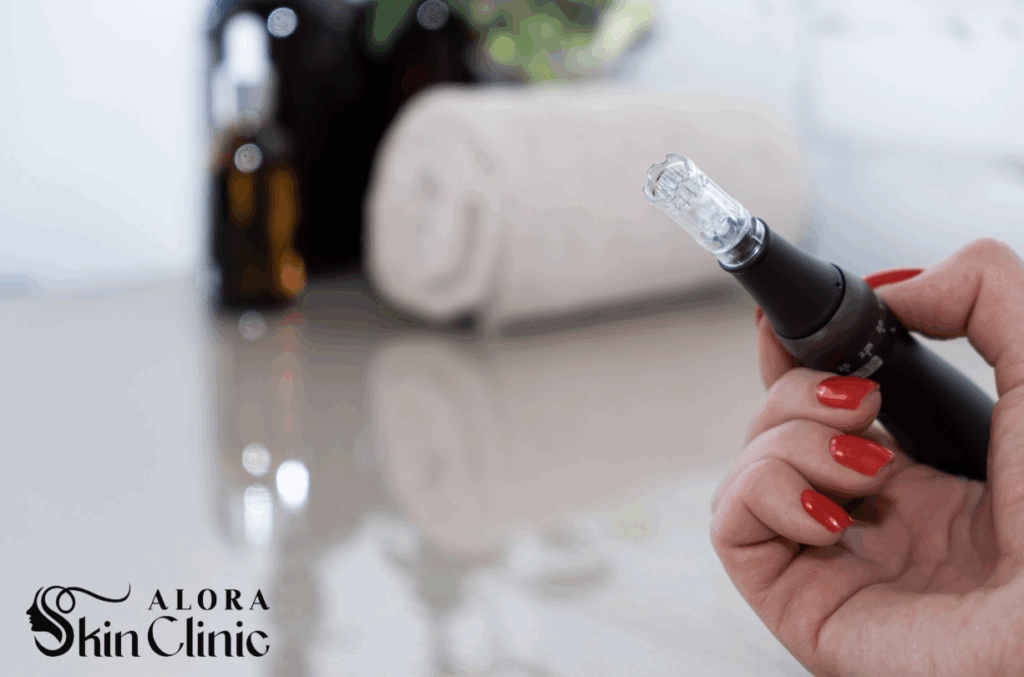
Microneedling Devices Explained: Roller vs Pen vs Professional Treatment
You’ve moved beyond curiosity about microneedling — and now you’re asking the right question:
Which device is actually right for your skin?
Between dermarollers, automated pens, and at-home tools, the options can feel overwhelming. And when it comes to your skin, choosing the wrong approach doesn’t just waste time — it can lead to irritation, uneven results, or long-term damage.
At Alora Skin Clinic, we believe the best results come from understanding not just what works — but why.
This guide breaks down microneedling tools, needle science, and safety — so you can make an informed, confident decision.
Microneedling Devices: What’s the Difference?
All microneedling tools work by creating controlled micro-channels in the skin to stimulate collagen production.
But how they do it makes a major difference.
Dermarollers (Manual Rollers)
Dermarollers use a rolling cylinder covered in needles.
Pros:
• Lower cost
• Easy to access
Limitations:
• Needles enter the skin at an angle (can cause tearing)
• Less precision
• Difficult to control depth
• Higher risk of irritation if misused
Dermarollers are typically used for very superficial treatments, not deeper skin concerns.
Microneedling Pens (Automated Devices)
Microneedling pens use vertical needle movement with adjustable depth.
Advantages:
• Precise depth control
• Consistent penetration
• Less trauma to the skin
• More effective for targeted concerns
These are the devices used in professional clinics because they allow customized, controlled treatments.
Dermastamps
Dermastamps are manually pressed into the skin rather than rolled.
Best for:
• Small, targeted areas
• Spot treatments
They offer more control than rollers but still lack the consistency of automated devices.
Why Professional Microneedling Is Different
The biggest difference isn’t just the device — it’s the precision and customization.
Professional treatments include:
• Medical-grade devices
• Controlled needle depth based on your skin
• Sterile, single-use cartridges
• Clinical protocols for safety and results
This allows us to treat concerns like:
• Acne scars
• Fine lines
• Uneven texture
• Skin laxity
With far more predictable and effective results.
The Science Behind Microneedles (What Most People Don’t Know)
The effectiveness of microneedling depends heavily on needle quality and material.
Most commonly used materials:
Surgical Steel
• Extremely sharp
• High precision
• Lower risk of skin trauma
• Standard in clinical settings
Titanium
• More durable
• Less likely to bend
• Slightly less sharp than steel
Gold-Plated Needles
• Hypoallergenic
• Suitable for sensitive skin
• Often built on a steel base
Why This Matters
Sharper, high-quality needles:
• Create cleaner micro-channels
• Reduce unnecessary trauma
• Improve healing response
• Deliver better collagen stimulation
This is why device quality directly impacts results.
Microneedling Depth: The Most Critical Factor
Needle depth determines both results and safety.
General guidelines:
• 0.25–0.5mm → Product absorption / surface texture
• 1.0–1.5mm → Collagen stimulation / fine lines
• 1.5mm+ → Acne scars (professional only)
⚠️ Depths above 1.0mm should always be performed by trained professionals.
Incorrect depth can lead to:
• Skin damage
• Inflammation
• Scarring
• Poor results
At-Home Microneedling: What You Need to Know
Many people consider at-home microneedling for convenience — but safety is a major concern.
Sterilization Risks
Improper cleaning can lead to:
• Bacterial contamination
• Skin infections
• Inflammation
Proper sterilization requires medical-level hygiene standards, which are difficult to maintain at home.
Common Mistakes
• Using too much pressure
• Incorrect needle depth
• Over-treating the skin
• Using active ingredients immediately after
These mistakes can compromise your skin barrier instead of improving it.
When Microneedling Works Best
Microneedling is most effective for:
• Acne scars
• Fine lines
• Enlarged pores
• Uneven texture
• Early signs of skin laxity
However, results depend heavily on:
• Device quality
• Technique
• Treatment depth
• Skin condition
Frequently Asked Questions
Can at-home microneedling replace professional treatments?
At-home devices may improve surface texture slightly, but they cannot deliver the same collagen stimulation or results as professional treatments.
How often should microneedling be done?
• Superficial treatments: every 3–4 weeks
• Deeper treatments: every 4–6 weeks
This allows time for proper collagen regeneration.
Is microneedling painful?
Professional treatments use numbing cream, making the process comfortable. Sensation varies depending on depth.
Microneedling in Scarborough: What’s the Best Option?
If your goal is visible, long-term skin improvement, professional microneedling is the most effective and safest approach.
At Alora Skin Clinic, we customize every treatment based on:
• Skin type
• Depth requirements
• Specific concerns
• Healing capacity
This ensures both safety and optimal results.
Book Your Microneedling Consultation in Scarborough
Choosing the right microneedling approach is the difference between minimal results and real transformation.
If you’re unsure which option is right for your skin, a professional consultation can give you clarity.
📍 Visit us at 21 Glendinning Ave, Scarborough
📞 Call (647) 547-0597 to book your consultation and receive a personalized microneedling plan.