
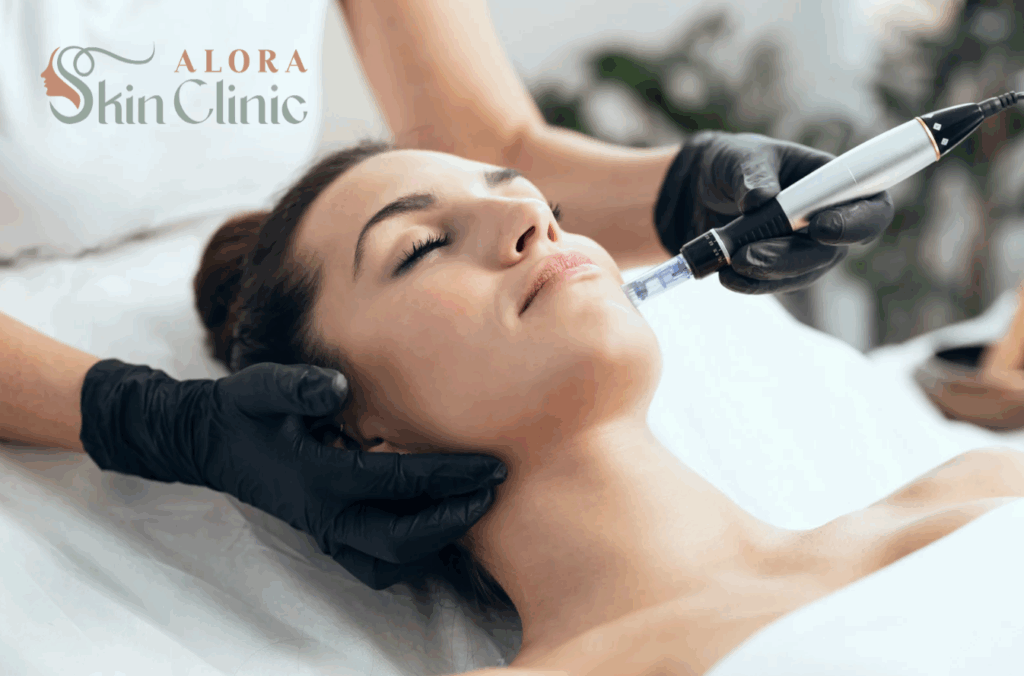
Your Blueprint for Safe & Effective Skin Rejuvenation
When you see dramatic before-and-after photos online, it’s clear that microneedling can create real, visible transformation. But the question every client eventually asks is the most important one:
“Will microneedling be safe and effective for my skin?”
The truth is simple: microneedling only delivers beautiful results when the treatment plan is personalized — not generic. A one-size-fits-all approach is not just ineffective; it can be unsafe.
This guide gives you the exact framework behind a personalized microneedling treatment, helping you understand how a skilled practitioner tailors the procedure to your unique skin type, concerns, and goals.
The Science Behind Personalized Microneedling Treatment
Microneedling works by creating thousands of controlled micro-injuries that activate your body’s natural healing response. This stimulates collagen and elastin — the two proteins responsible for firmness, elasticity, and smooth texture.
But how the treatment works for your skin depends on precise adjustments made by your provider:
1. Needle Depth
This is the single most important variable in personalized microneedling treatment.
-
0.25–0.75mm: tone, texture, mild rejuvenation
-
1.0–1.5mm: fine lines, moderate concerns
-
1.5–2.5mm: acne scars, deep wrinkles, severe texture issues
Selecting the wrong depth can lead to poor results or unnecessary inflammation.
2. Technique & Speed
Different skin zones require different approaches.
-
Under-eye: slow, shallow, delicate
-
Cheeks: deeper penetration for scars
-
Forehead: tighter skin → requires precise pressure
An experienced provider adjusts technique constantly throughout your session.
3. Treatment Frequency
Your skin’s healing capacity determines:
-
Total number of sessions
-
How far apart they should be
-
How aggressive each session can safely be
True expertise lies in knowing when to push deeper — and when to protect and strengthen instead.
The Protocol Matrix: Tailored Microneedling for Your Skin Type
Here’s how a personalized microneedling treatment plan is designed for different skin conditions and skin tones.
Microneedling for Sensitive or Reactive Skin (Rosacea-Prone)
The Strategy:
A “low and slow” protocol using shallow depths (0.25–0.75mm) to avoid unnecessary inflammation.
Key Considerations:
-
Never treat during active flare-ups
-
Pre-care focuses on calming and barrier repair
-
Post-care is gentle, hydrating, and fragrance-free
-
No occlusive products that trap heat or bacteria
The goal is to strengthen the skin over time — not overwhelm it.
Microneedling for Acne Scars (Atrophic, Rolling, Boxcar)
The Strategy:
Deeper needle penetration (1.5–2.5mm) targets the dermis to break up scar tissue and stimulate collagen.
Key Considerations:
-
Must have acne fully under control first
-
4–6 sessions are typical; spaced 4–6 weeks apart
-
Consistency is crucial — each treatment builds on the last
This is where microneedling often delivers some of its most dramatic, long-term improvements.
Microneedling for Hyperpigmentation & Darker Skin Tones (Fitzpatrick IV–VI)
This group requires the highest level of expertise to avoid Post-Inflammatory Hyperpigmentation (PIH).
The Strategy:
Moderate depths (0.5–1.5mm) combined with pigment-stabilizing pre- and post-care.
Key Considerations:
-
2–4 weeks of pre-treatment with tyrosinase inhibitors (azelaic acid, kojic acid)
-
No exfoliation for at least 7 days before treatment
-
Strict sun avoidance and SPF 50 daily
-
Gentle hydration only for the first 72 hours post-treatment
Personalization is essential for both safety and efficacy.
Your Treatment Journey: What to Expect Over Time
A personalized microneedling treatment follows a predictable healing timeline:
Days 1–3: The Inflammatory Phase
Redness, warmth, swelling — similar to a sunburn.
Days 3–5: The Peeling Phase
Light flaking or peeling as skin renews itself.
Week 1–2: The Radiance Phase
Many clients notice a refreshed “glow.”
Months 1–6: The Collagen Remodeling Phase
Structure improves.
Texture becomes smoother.
Scars soften.
Fine lines fade.
Microneedling is a cumulative treatment — the more strategic the series, the better the results.
Pre- & Post-Care: Your Safety Blueprint
Your provider handles the treatment.
You handle the healing.
Here’s your checklist.
1 Week Before Treatment
-
Avoid sun exposure
-
Stop retinoids, acids, exfoliants
-
Avoid blood-thinning supplements (consult your doctor)
-
Reschedule if you have active acne, infections, or lesions
First 72 Hours After Treatment
Do:
-
Use a gentle cleanser
-
Apply hydrating serums (hyaluronic acid)
-
Use simple moisturizer
-
Wear SPF 30+ daily
Avoid:
-
Makeup for 24–48 hours
-
Sweating, gyms, steam rooms, saunas
-
Pools and hot tubs
-
Retinoids, vitamin C, exfoliating acids
Proper post-care is essential — it directly impacts results.
Frequently Asked Questions
Is microneedling painful?
Most clients feel only mild prickling thanks to professional numbing.
How many sessions do I need?
3–4 for general rejuvenation; 4–6+ for scarring.
Can it make my skin worse?
Only if performed incorrectly.
With a trained provider, risks are extremely low.
Who should avoid microneedling?
Those who are pregnant, have active infections, keloid scarring history, eczema/psoriasis in the area, or uncontrolled acne.
The Next Step: Your Personalized Skin Plan
Microneedling is not about needles — it’s about strategy, customization, and expertise.
At Alora Skin Clinic in Scarborough, every treatment plan is uniquely designed around:
-
Your skin type
-
Your concerns
-
Your healing capacity
-
Your long-term goals
If you’re ready for a safe, deeply personalized microneedling experience, we’re here to create your perfect blueprint. Book Your Personalized Consultation Today